
How Retractable Roof Pergola Systems Work
Retractable roof pergolas operate on one of two mechanisms, each suited to different priorities and budgets.
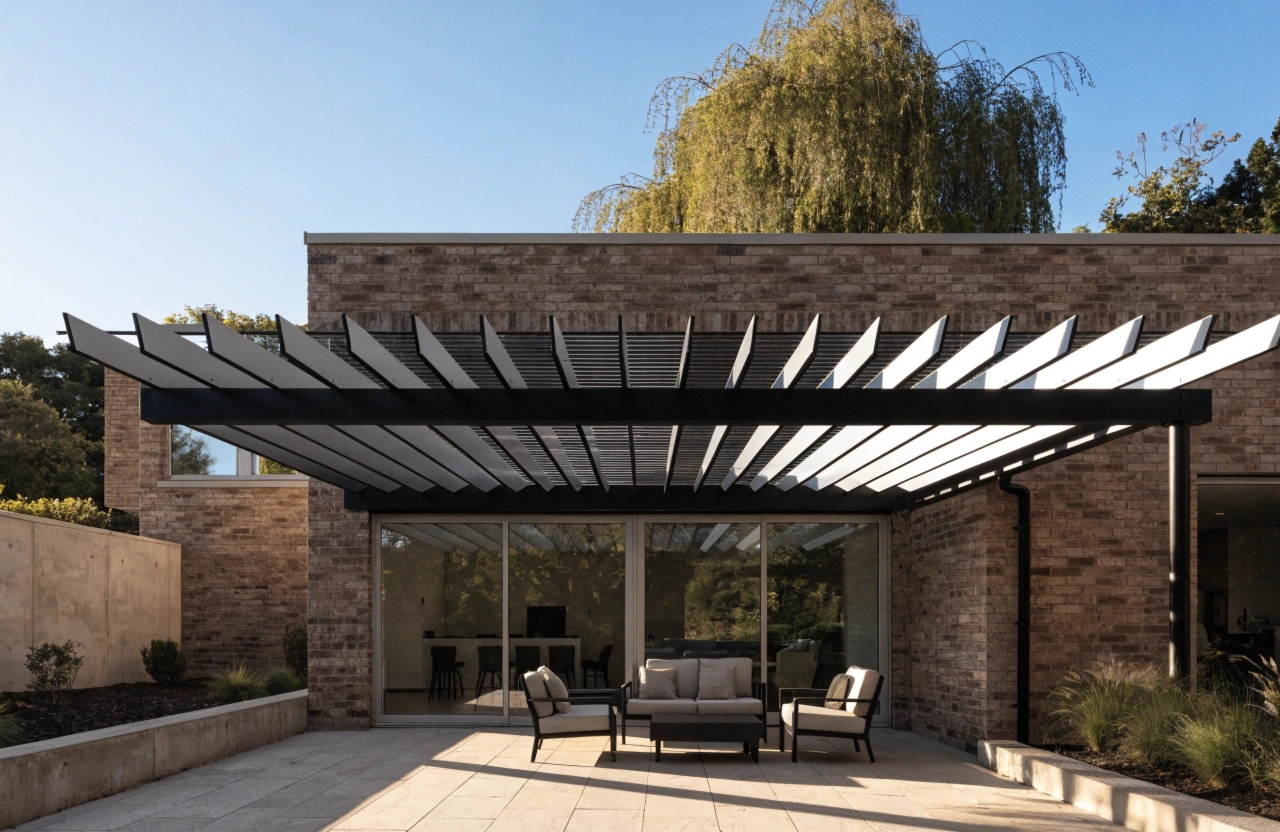
Louvred blade roof systems use individual aluminium blades that rotate on a central axis, opening to let sun and airflow through or closing flat to form a solid, watertight roof. The blades are operated through a motor housed in the frame and can be set to any angle between fully open and fully closed, giving fine control over light and airflow rather than a simple on/off state. Because the blades are aluminium, the system handles Adelaide’s UV exposure and occasional hail without the wear a fabric surface experiences over time.
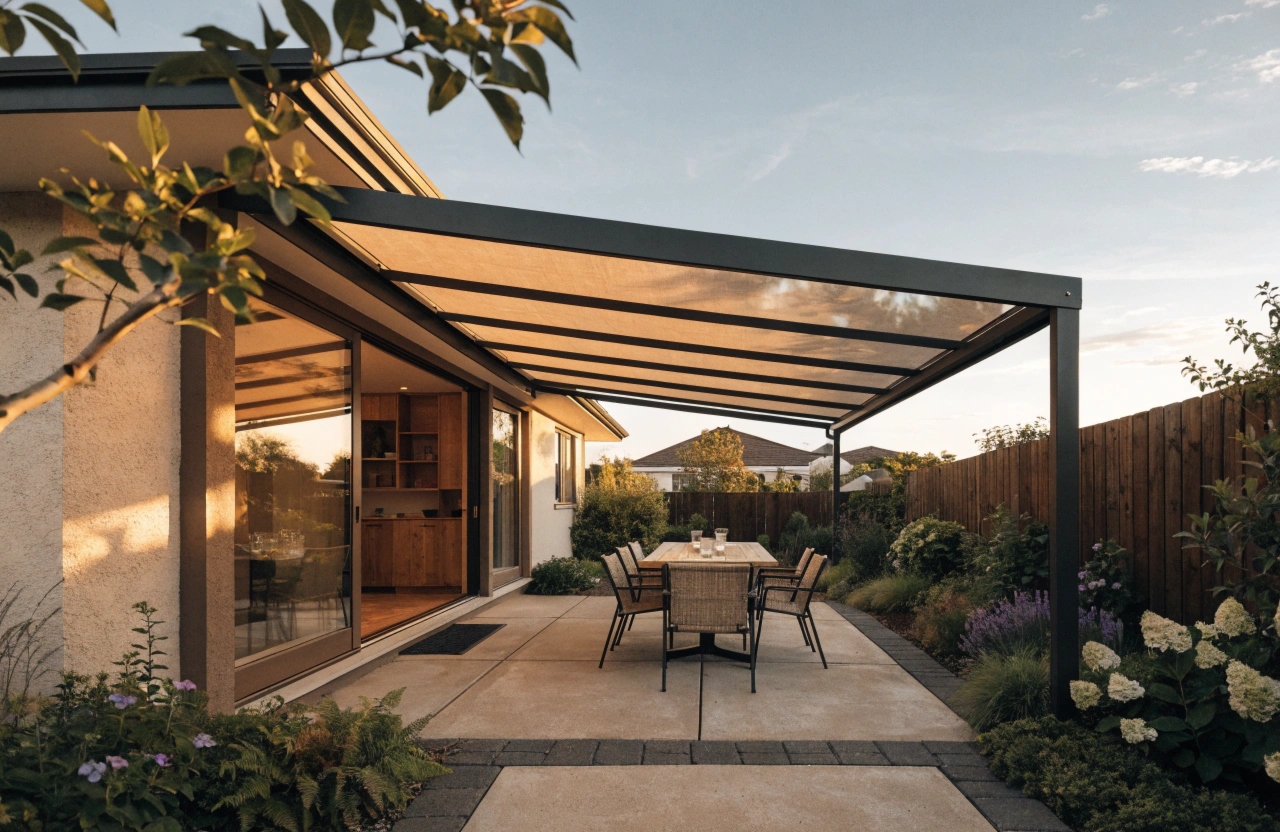
Fabric retractable canopy systems use a weather-resistant fabric sheet that extends across a frame on a track and retracts into a housing cassette when not in use. These systems suit homeowners after a softer, more traditional look and a lower entry price point, and work well over spaces that don’t need full structural rain protection year-round.
Comparing the two:
| Feature | Louvred Blade Roof | Fabric Retractable Canopy |
| Material | Aluminium | Weather-resistant fabric |
| Weather protection | Full rain protection when closed | Sun and light rain protection |
| Light control | Adjustable angle | Open or closed |
| Best suited to | Year-round outdoor living, pool areas | Seasonal shade, lower budget projects |
| Maintenance | Low, minimal wear | Periodic fabric inspection and care |

Motorisation and Smart Control Options
A retractable roof pergola is built around motorised control, and the options available go well beyond a basic open-close switch.
Remote control comes standard with most systems, letting the roof be opened, closed, or angled (on louvred systems) from a handheld unit without leaving the entertaining area. Wall-mounted switches offer a fixed control point near a back door or outdoor kitchen for households that prefer not to manage a handheld remote.
Smartphone app integration is increasingly the preferred option for Adelaide homeowners running a connected smart home. The roof can be operated from anywhere in the house, scheduled to open or close at set times of day, and in some systems grouped with other connected outdoor features such as lighting or heating for single-app control.
Automatic rain and wind sensors add a layer of protection that matters in Adelaide’s pattern of sudden summer storms. Sensors detect the first sign of rain or wind beyond a set threshold and close the roof automatically, even when no one is home to operate it manually. For louvred systems this typically means the blades close flat; for fabric systems the canopy retracts or extends depending on the configuration.
These controls work together rather than as separate add-ons — a household might use the app for daily scheduling, the wall switch for quick adjustments, and the rain sensor as a fail-safe for unattended periods. Motorisation choice is one of the first decisions to settle early in the planning process, as it affects wiring and the position of the control unit within the frame.
Frame and Structural Requirements
A retractable roof pergola carries more weight and mechanical complexity than a standard fixed structure, and the frame underneath has to be engineered accordingly.
Louvred blade systems in particular add significant load — the motor, the blade assembly, and the moving parts all sit on top of the frame and need to be accounted for in the footing and post design. A frame sized for a basic fixed pergola will not necessarily handle a retractable roof system without modification, which is why an accurate structural assessment needs to happen before any quote is finalised, not after.
Footings need to be set to a depth and diameter that accounts for Adelaide’s variable soil conditions, particularly across the Hills fringe and parts of the eastern suburbs where clay content affects ground movement over time. Post spacing and beam sizing are calculated around the specific roof system chosen, the span of the structure, and whether the pergola is freestanding or attached to the existing dwelling.
Attached structures bring an additional requirement — the connection point to the house needs to be assessed for structural capacity and weatherproofing, since this is where water management around the new roofline matters most.
Engineering certification is typically required for retractable roof structures given the additional load and moving components, and forms part of the documentation needed for council approval in most Adelaide council areas. Getting the frame specification right from the outset avoids performance issues, and avoids costly retrofitting, once the system is installed and operating.
Colour, Finishes, and Add-On Integration
Retractable roof pergolas are available across a range of finishes that allow the structure to match the existing roofline, brickwork, or outdoor colour scheme of the home rather than standing apart from it.
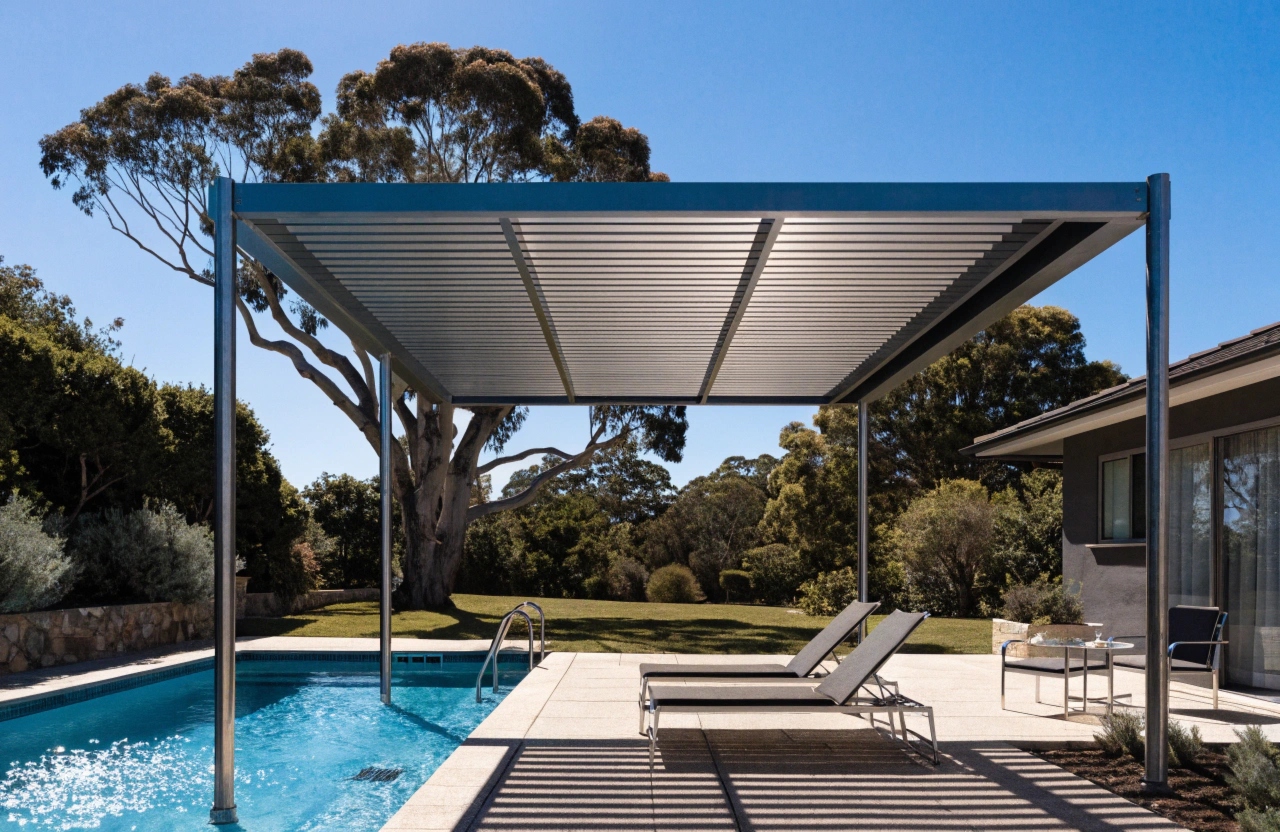
Aluminium frames and louvre blades come in a standard range of Colorbond-matched colours along with powder-coated finish options, giving flexibility for homeowners matching an existing house colour or working toward a specific design direction. Fabric canopy systems offer a range of fabric colours and patterns, generally with a more limited palette than the aluminium finish range given the nature of the material.
Side screens and café blinds extend the usability of the structure beyond the roof itself, closing in the sides of the space to block wind, rain spray, and low-angle sun that a roof alone doesn’t address. These are commonly added around the perimeter of a retractable roof pergola to create a fully enclosed, weatherproof room when needed, while retaining the option to open everything up on a still, mild day.
Lighting and fan integration within the roof frame is a common addition, with options to run wiring through the structure during installation so the finished pergola has integrated downlights, strip lighting, or a ceiling fan built into the frame rather than added as a separate fixture afterward. Planning these additions during the design stage, rather than retrofitting later, keeps the wiring concealed and the finished structure looking clean.
These choices are generally finalised during the design and quoting stage, once the frame and roof system have been confirmed.
Best Applications for Retractable Roof Pergolas
Retractable roof pergolas suit a range of outdoor spaces across Adelaide properties, though some applications get more value from the system than others.
Pool areas are one of the strongest fits. A retractable roof gives full sun exposure for swimming and lounging on a hot day, then closes to protect furniture, decking, and pool surrounds from sudden rain or extreme UV without anyone needing to clear the area first. Hills fringe and Burnside-area properties with premium pool zones get particular value from a louvred system here, given the year-round usage and the higher standard of finish these spaces typically call for.
Alfresco and entertaining areas attached to the home benefit from the flexibility a fixed roof can’t offer. A dinner party on a mild evening can run with the roof open to the sky, while a Christmas lunch under January sun runs with the roof closed and the side screens fitted for full shade. This is the most common application across the eastern and southern suburbs, where outdoor entertaining is a core part of how the home gets used.
Kitchen and dining extensions suit homeowners treating the outdoor space as genuine additional living area rather than an occasional-use zone, where weather-independent reliability matters more than in a space used a few times a month.
New build backyards in the northern growth corridors, often left as an exposed slab by the original builder, get particular benefit from a retractable system that makes the space usable across the full range of Adelaide’s seasons rather than only on mild days.
Frequently Asked Questions
How much does a retractable roof pergola cost in Adelaide?
Pricing depends on roof system type, size, motorisation, and any add-ons such as side screens or lighting. Louvred systems generally sit at a higher price point than fabric canopy systems. A site measure and quote gives an accurate figure for the specific project.
Do retractable roof pergolas need council approval in Adelaide?
Most retractable roof structures require council approval given their size, engineering, and attachment to the dwelling in many cases. Requirements vary by council area and are confirmed during the assessment process.
Can a retractable roof pergola be added to an existing fixed pergola?
In some cases an existing structure can be assessed for compatibility, though the additional load of a retractable roof system often requires frame reinforcement or a new structure built to the correct specification.
How long do retractable roof systems last?
With correct installation and routine maintenance, aluminium louvred systems are built for long-term outdoor use. Fabric canopy systems have a longer replacement cycle for the fabric component compared to the frame itself.
What maintenance do retractable roof pergolas need?
Louvred systems need minimal upkeep beyond periodic cleaning. Fabric systems benefit from regular inspection of the fabric and tracking components to maintain smooth operation.
Get a Free Measure and Quote
A retractable roof pergola gives Adelaide homeowners a single structure that adapts to the day, the season, and the way the space actually gets used — open to the sky on a mild afternoon, fully closed and weatherproof when a summer storm rolls in. Whether the priority is full year-round weather control with a louvred system, a lighter fabric solution for seasonal shade, or a pool area built around premium finishes, the right specification starts with an accurate, on-site assessment of the space and how it gets used.
Every project begins with a free measure and quote, carried out at the property, covering frame and footing requirements, roof system selection, motorisation options, and finish choices specific to the home. There’s no cost and no pressure to proceed at this stage — just a clear picture of what’s achievable for the space and the budget.
For homeowners across Campbelltown, Norwood, Burnside, the southern suburbs, the Hills fringe, and the northern growth corridors, the next step is straightforward.
Contact us today to book a free measure and quote, and find out which retractable roof system suits the home, the climate, and the way the outdoor space gets used.
