
What Are Polycarbonate Roof Panels?
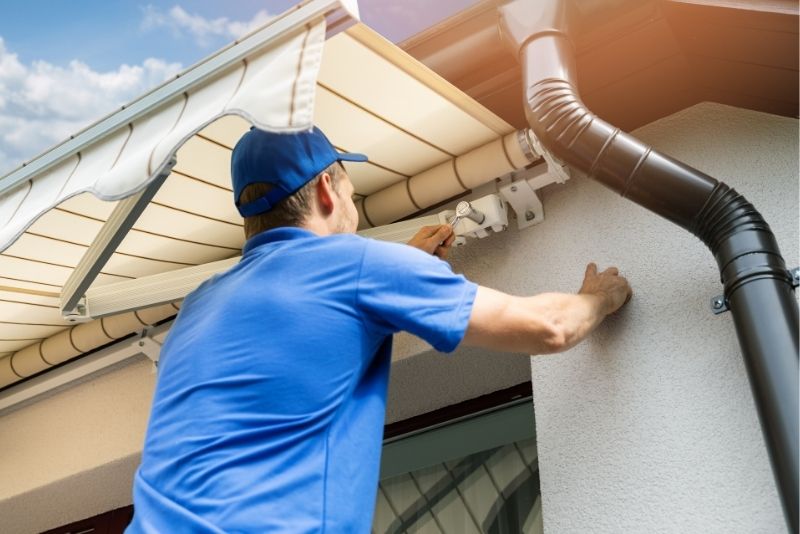
Polycarbonate roof panels are lightweight, impact-resistant sheeting used to roof pergolas, carports, alfresco covers, and pool areas — letting natural light through while keeping weather out.
Impact resistant — won’t crack or shatter under hail or debris
Light transmitting — allows natural daylight through without full exposure to the elements
UV stabilised — treated to resist yellowing under Adelaide’s high UV load
Thermally performing — multiwall construction reduces heat transmission into the space below
Three main panel types used in Adelaide residential installations:
Twinwall — two layers, single air channel; lightweight and cost-effective, suits carports and simple alfresco covers
Multiwall — additional chambers for better insulation and rigidity; suits pergolas with direct sun exposure
Solid sheet — single-layer panel; used where maximum clarity or specific load ratings are needed

Why Adelaide Homeowners Choose Polycarbonate Over Colorbond and Glass
When you’re roofing a pergola or alfresco cover, there are really three options on the table: Colorbond steel, glass, and polycarbonate. Each has its place. Colorbond is tough and low maintenance but blocks all natural light. Glass lets light through beautifully but comes at a significant cost premium and adds considerable weight to the structure. Polycarbonate is where natural light is the priority and budget is a real consideration.
| Colorbond | Glass | Polycarbonate | |
|---|---|---|---|
| Natural light | None | Full | Controlled |
| Weight | Medium | Heavy | Light |
| Cost | Low–medium | High | Medium |
| Impact resistance | High | Low | High |
| UV performance | N/A | Low–medium | High (UV stabilised) |
| Heat transmission | High underneath | High | Controlled by tint |
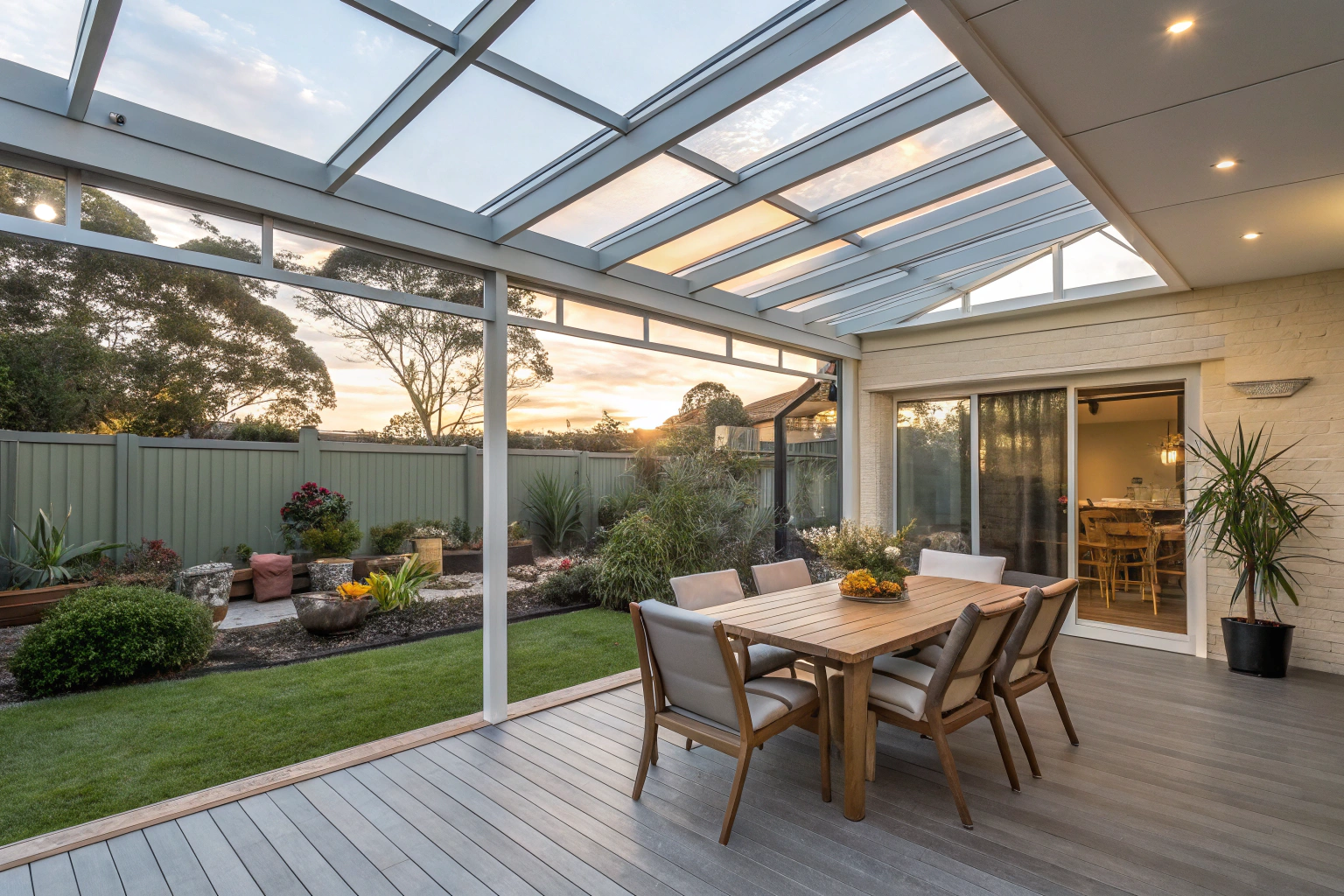
Tint and Opacity Options: Matching the Panel to Your Roof's Sun Exposure
Panel selection isn’t just about structural type — tint and opacity directly affect how comfortable the space below will be. We offer four main options:
Clear: Clear panels give you maximum light transmission. They work best on south-facing or shaded structures where direct sun isn’t a major factor. If your structure gets limited direct sunlight through the day, clear is often the right call.
Opal: Opal panels diffuse light softly and eliminate harsh glare. They’re our most popular choice for Adelaide alfresco areas that receive direct afternoon sun — the light comes through without the heat spike you’d get from a clear panel.
Bronze: Bronze reduces heat transmission while keeping a warm, natural light feel in the space below. It’s well suited to west-facing structures that cop the full force of Adelaide’s late afternoon sun.
Grey: Grey gives you the strongest heat and glare reduction of the four options. If your roof faces north and sits in direct sun through Adelaide’s summer, grey is worth serious consideration.
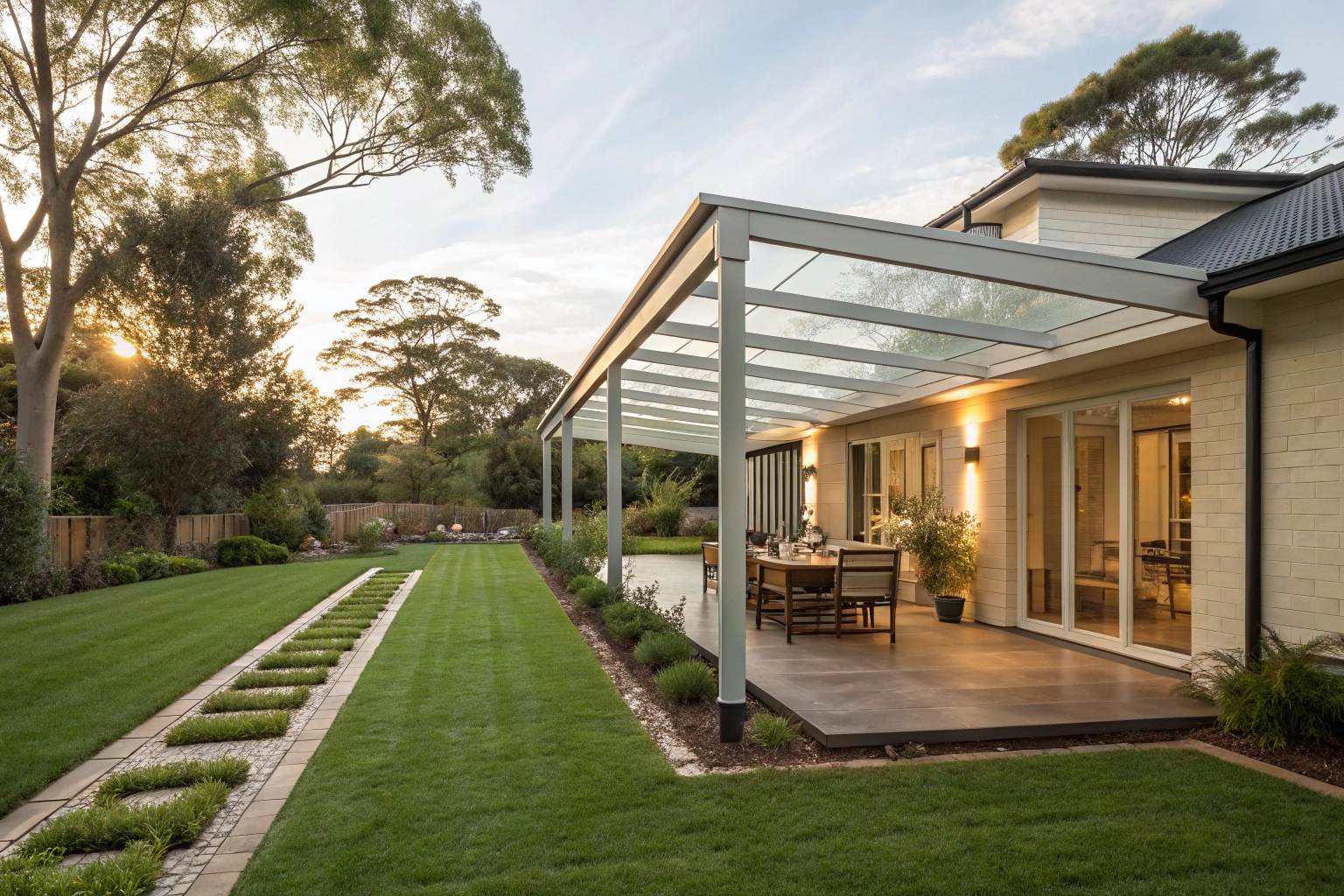
UV Performance in Adelaide's High-Exposure Climate
Adelaide sits in one of Australia’s highest UV index zones, and that matters when you’re choosing a roofing product that’s going to be sitting in direct sun for years.
Quality polycarbonate panels carry a UV-stabilised coating on the exposed surface. That coating resists yellowing, surface crazing, and the gradual loss of light transmission that comes with UV degradation over time.
Lower-grade product without adequate UV stabilisation tells a different story. Within a few years under Adelaide’s summer UV load, those panels start to yellow, become brittle, and let through a fraction of the light they did when new.
The panels we supply are UV stabilised as standard — and in this climate, that’s not a detail worth skipping on.
How Polycarbonate Roof Panels Are Installed: Fixings, Joins, and Weatherproofing
Getting polycarbonate roofing right comes down to the installation detail. Here’s how we approach every job:
- Frame preparation and pitch confirmation — we check the existing frame or new structure for level, alignment, and pitch before any panels go on. Getting this right at the start saves problems later.
- Panel sizing and cutting — panels are measured and cut to suit the exact dimensions of your structure. Clean cuts and correct sizing are what make the finished roof look right.
- Fixing with thermal washers — polycarbonate expands and contracts with temperature changes. We use thermal washers and the correct fasteners to allow for that movement, so panels don’t crack or buckle over time.
- Ridge and hip capping — ridge caps are fitted along all apex points to seal the roof line and keep weather out at the joins.
- Join sealing and flashing — all panel joins and wall junctions are sealed and flashed properly. This is where a lot of budget installs fall short.
- Gutter and downpipe integration — we connect guttering and downpipes to manage water run-off cleanly away from the structure and your home.
Minimum Roof Pitch and Other Structural Considerations
Polycarbonate roofing needs to be installed at the right pitch to perform properly. Below the minimum, water sits in the panel joins and debris builds up rather than washing off with rain.
Beyond pitch, there are two other structural details that matter:
Frame spacing — the gap between purlins needs to match the rated span for the panel thickness you’re using. Push that span too far and the panel will flex under load, which affects both performance and appearance over time.
Thermal expansion — polycarbonate moves with temperature. In Adelaide, where roof surface temperatures can get extreme through summer, that movement is significant. Our fixings and join details are selected specifically to accommodate it, so panels stay secure and watertight through the full range of seasonal temperature change.
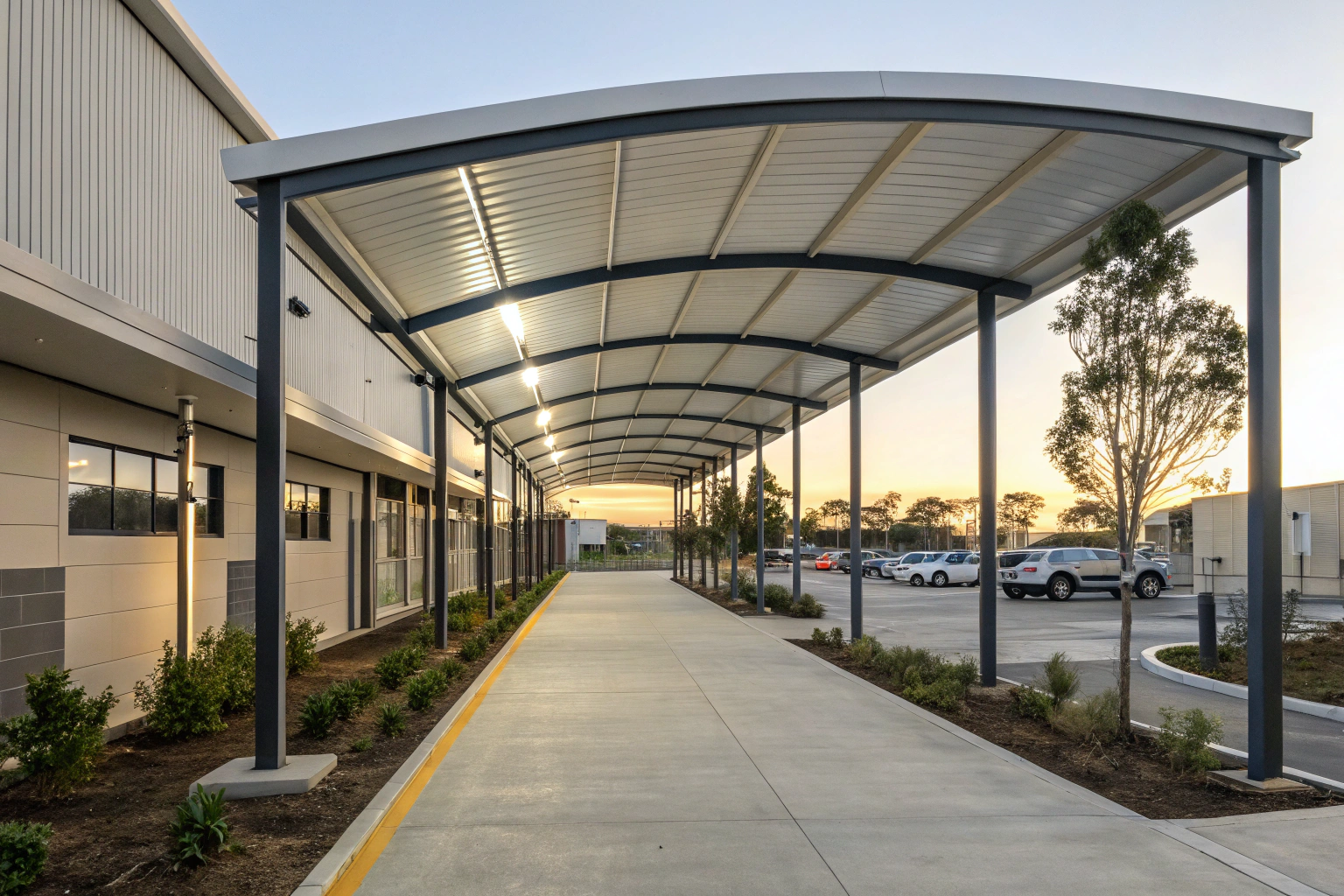
Panel Selection Guide: Matching Product to Structure Type
The right panel depends on what you’re covering. Here’s how we approach it across the most common structure types we work on in Adelaide:
Pergolas and Alfresco Covers: For most Adelaide pergolas and alfresco covers, opal or bronze multiwall is our go-to recommendation. The combination of diffused light and reduced heat transmission performs well under Adelaide’s direct sun conditions, particularly on north and west-facing structures.
Carports: Clear or opal twinwall is the most common choice for carports. Impact resistance is worth factoring in here — Adelaide’s hail exposure is real, and twinwall polycarbonate handles it well without the cost of a heavier panel.
Pool Areas: Clear or lightly tinted multiwall works best over pool areas. You want to keep the space feeling bright and open, and multiwall handles the moisture environment well.
Patio Extensions and Verandahs: Pitch and orientation do most of the talking here. A south-facing verandah and a north-facing patio extension are completely different propositions, and tint selection should follow accordingly.
Adelaide Suburbs We Service for Polycarbonate Roof Panel Installation
We supply and install polycarbonate roof panels across all Adelaide metro suburbs, the Hills fringe, and outer metro areas. If you’re in Adelaide, chances are we cover you.
Eastern suburbs: Campbelltown, Norwood, Burnside, Magill
Southern suburbs: Morphett Vale, Reynella, Hallett Cove
Northern corridors: Angle Vale, Munno Para, Blakeview
Hills fringe: Stirling, Aldgate
Coastal: Glenelg, Brighton
North-eastern suburbs: Tea Tree Gully, Modbury, Golden Grove
Not on the list? Get in touch — we service a wide area beyond the suburbs listed here, and a free measure and quote is the easiest way to confirm we cover your area.
Get a Free Measure and Quote for Polycarbonate Roof Panels in Adelaide
Ready to get polycarbonate roof panels installed on your Adelaide home? We offer a free measure and quote across all Adelaide suburbs — no obligation, just a straight answer on what’s right for your structure and a written quote to match.
Get in touch with Pergolas Adelaide Experts today.
📞 08 8246 5424
Here’s how it works:
- Book your free measure and quote — we come to you, assess your structure, and walk you through your panel options
- Receive your panel recommendation and written quote — clear, itemised, and obligation free
- Installation scheduled and completed by our Adelaide team — from first fixing to finished ridge cap, we handle it all
FAQs: Polycarbonate Roof Panels Adelaide
Quality UV-stabilised polycarbonate panels typically last 15–25 years when installed correctly. The UV coating on the exposed surface is what protects against yellowing and brittleness over time — which is why product quality matters as much as installation quality.
They do produce some rain noise, more so than Colorbond. Multiwall panels are quieter than twinwall because the additional chamber structure absorbs some of the impact. If rain noise is a concern, it’s worth factoring panel type and thickness into your selection.
Yes. Impact resistance is one of polycarbonate’s genuine strengths. It handles hail significantly better than glass and won’t shatter or crack under the kind of hail events Adelaide regularly sees.
Whether you need approval depends on the size and configuration of the overall structure, not the roofing material itself. We can talk you through what typically applies in your situation at the measure and quote stage.
Lower-grade panels without adequate UV stabilisation will yellow relatively quickly under Adelaide’s UV load. The panels we supply carry a UV-stabilised coating as standard, which resists yellowing and degradation over the life of the installation.
Cost depends on the size of the structure, the panel type selected, and the complexity of the install. We provide a full written quote after the free measure — that’s the most accurate way to give you a real number for your specific job.
