
What Makes Composite Decking Suited to Adelaide's Climate
Adelaide’s outdoor living season runs long — and that puts any decking material under sustained pressure. The combination of intense summer UV, temperatures regularly pushing past 38°C, and the occasional heavy downpour creates conditions that expose the weaknesses in natural timber over time.
Composite decking is engineered specifically for this kind of environment. The core composition — timber fibre and recycled plastics bonded under heat and pressure — produces a board that doesn’t absorb moisture the way natural timber does. That means no cupping, no cracking, and no seasonal movement that loosens fixings and creates uneven surfaces underfoot.
UV resistance is equally relevant for Adelaide installations. Premium composite boards carry fade and stain warranties that reflect genuine performance engineering — not a marketing claim. The pigmentation is carried through the board’s cap layer, which acts as a protective skin against the UV intensity that bleaches untreated timber within a single summer.
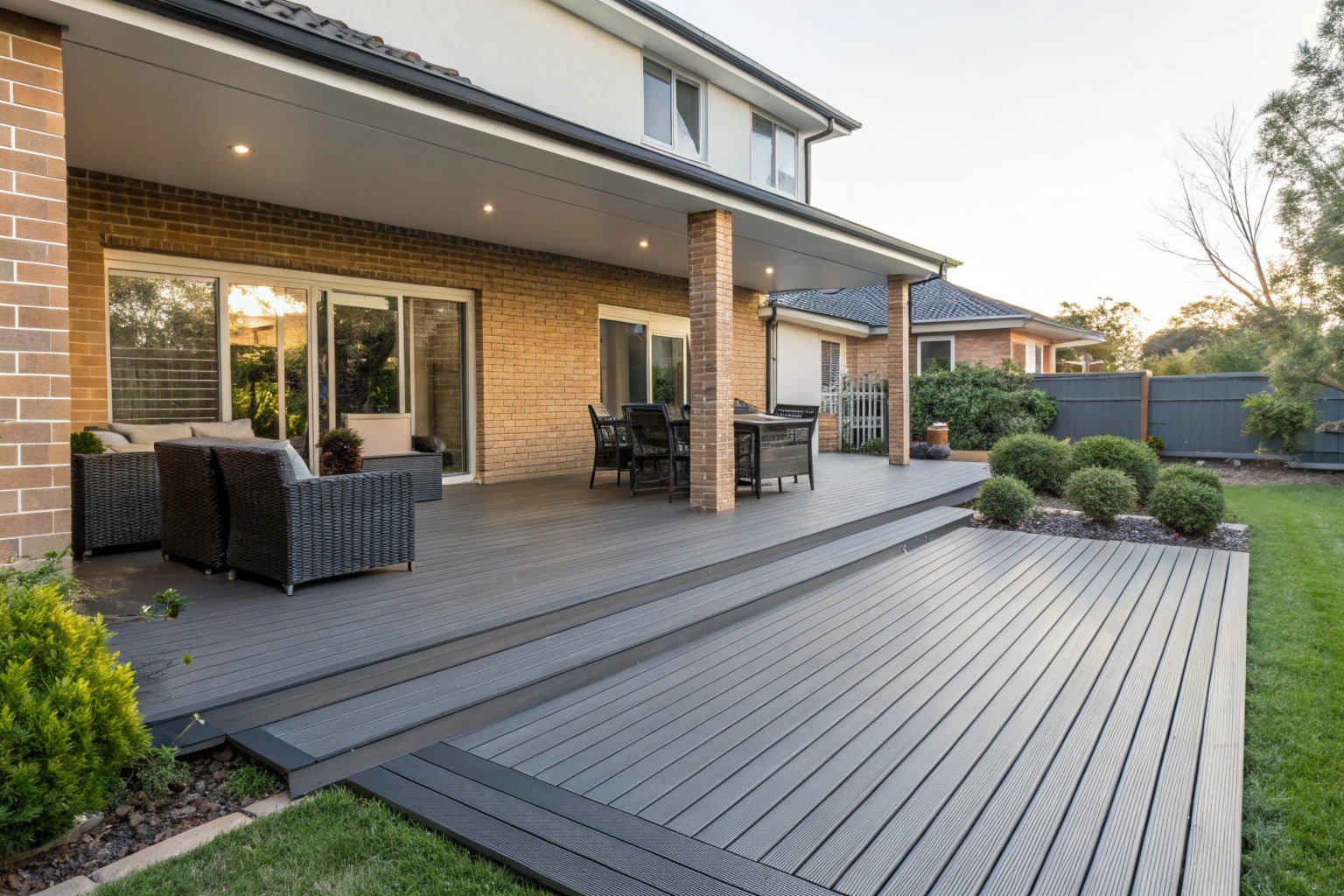
For families with a pool surround, a splinter-free surface is a meaningful practical advantage. Composite boards remain smooth underfoot even after years of wet feet, direct sun, and heavy foot traffic — a performance characteristic that timber simply cannot match without ongoing maintenance intervention.
The material doesn’t require oiling, resealing, or sanding. Periodic cleaning with a brush and soapy water is sufficient to maintain both appearance and performance across Adelaide’s seasonal extremes.

Not All Composite Decking Is Equal — What to Look For
Product quality varies significantly across the composite decking market, and this is where professional advice makes a genuine difference. Understanding what separates a premium board from a budget alternative is worth knowing before committing to a product.
Hollow Core vs Solid Core Boards
The most fundamental product distinction is hollow core versus solid core construction. Hollow core boards are lighter and typically lower in cost, but they produce a more pronounced flex underfoot and can be more vulnerable to impact damage over time. Solid core composite boards offer a denser, more substantial feel that closely replicates the underfoot experience of a hardwood timber deck — a meaningful quality difference that becomes obvious the moment you walk on both.
Cap Layer Technology
Premium composite boards use a full polymer cap layer that wraps all four sides of the board, protecting the timber fibre core from moisture ingress and staining. Boards with partial or no capping are more susceptible to edge absorption, which undermines long-term performance regardless of what the surface finish looks like.
Warranty Terms
Fade and stain warranty periods vary between 10 and 25 years depending on the product range. Reading the warranty conditions — not just the headline figure — is important. Coverage terms, maintenance requirements, and exclusion clauses differ substantially between manufacturers, and a shorter warranty with clear terms is often more reliable than a longer one with significant conditions attached.
Choosing the Right Board Profile and Colour for Your Adelaide Home
Board selection goes beyond performance specifications. The visual outcome — how the finished deck reads against the home’s architecture, garden, and existing outdoor structures — is equally important, and getting it right requires thinking through a few key considerations.
Board Texture and Finish
Composite decking profiles range from smooth, low-sheen finishes suited to contemporary architectural homes through to deeply embossed wood grain textures that carry genuine visual warmth. The embossed profiles work particularly well on established suburban properties where the goal is to complement existing landscaping and garden beds rather than contrast against them. Both finish types are available in grooved and ungrooved profiles — grooved boards accept hidden fastening systems, which we cover in the installation section.
Colour Selection
Adelaide’s outdoor environments tend to favour boards in the warm grey, charcoal, and natural brown spectrum — tones that read well against Colorbond roofing, rendered masonry, and the native landscaping common across the eastern and southern suburbs. Lighter tones suit coastal properties from Glenelg through to Marino, where the surrounding palette is naturally bleached and open.
Selecting colour under showroom lighting versus full Adelaide summer sun produces noticeably different results. Viewing sample boards outdoors at your property — against your existing paving, cladding, or fencing — is the most reliable way to confirm a colour choice before installation begins.
The right product combination of profile, texture, and colour turns a functional outdoor surface into a space that feels considered and finished.
How We Install Composite Decking — Process and Standards
The quality of a composite deck is only as good as the installation behind it. A premium board fitted to a poorly engineered subframe will develop problems — bounce, movement, drainage issues — that no amount of product quality can overcome. This is where professional installation separates itself from budget alternatives.
Subframe Engineering
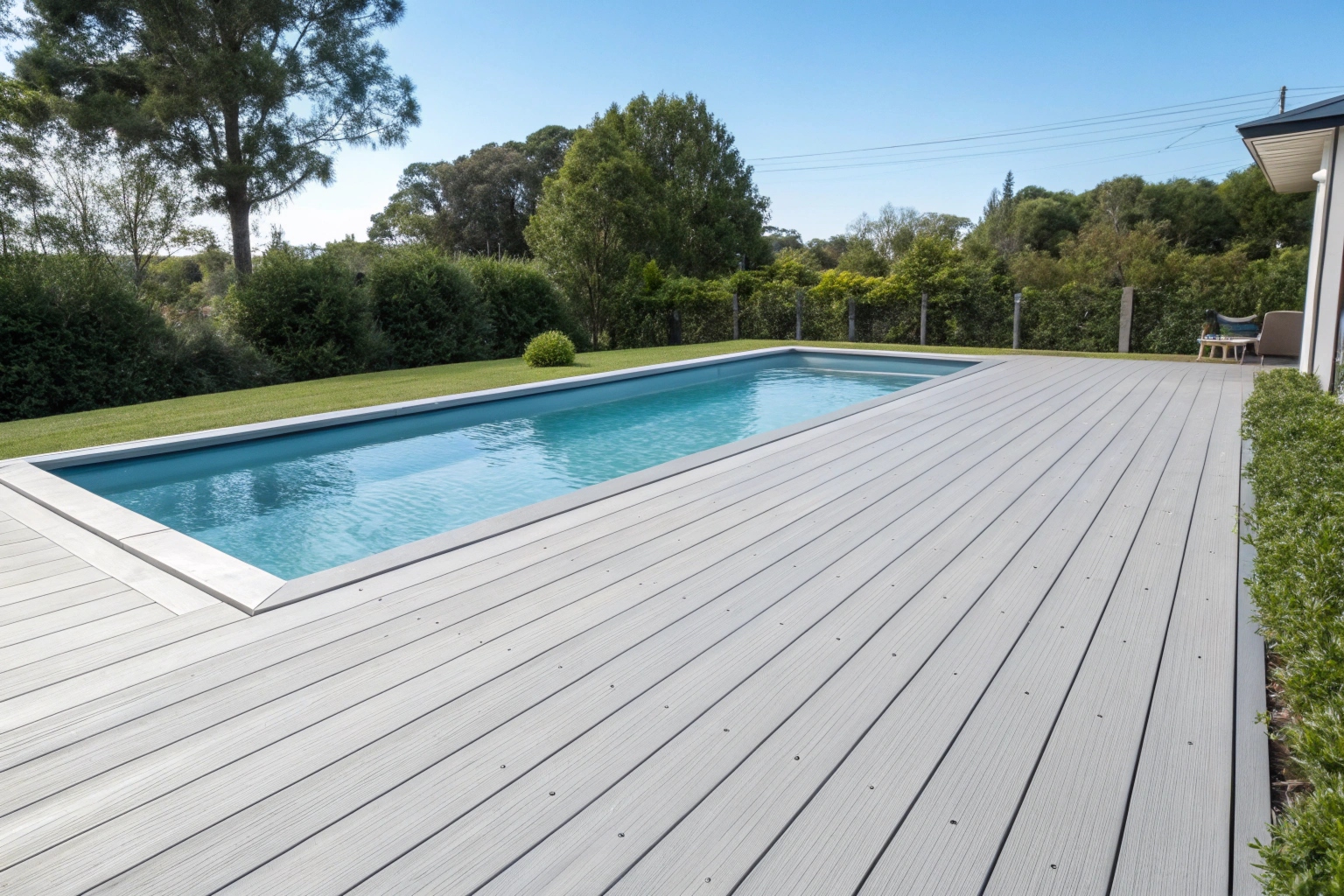
Composite decking requires a different subframe approach to timber. Joist spacing is typically tighter — 400mm centres is standard for most composite products compared to the 450–600mm common in timber installations — and the subframe material itself matters. Aluminium and treated hardwood subframes are both appropriate depending on site conditions, with aluminium offering superior corrosion resistance in moisture-exposed environments including pool surrounds.
Hidden Fastening Systems
Premium composite installations use clip-based hidden fastening systems seated in the board groove, producing a clean uninterrupted deck face with no visible screw heads. Beyond aesthetics, hidden fasteners allow for the minor lateral movement composite boards experience through Adelaide’s temperature range without creating surface stress.
Board Spacing and Drainage
Correct board spacing — typically 5–6mm between boards — allows for thermal expansion and adequate drainage across the deck surface. Insufficient spacing causes boards to press against each other under summer heat load, producing visible buckling.
Edge Treatment
End caps and fascia boards finish the perimeter cleanly, concealing the board ends and subframe structure. A well-finished edge is one of the clearest indicators of installation quality and has a significant impact on the overall appearance of the completed deck.
Composite Decking Installation Across Adelaide — Our Service Area and Process
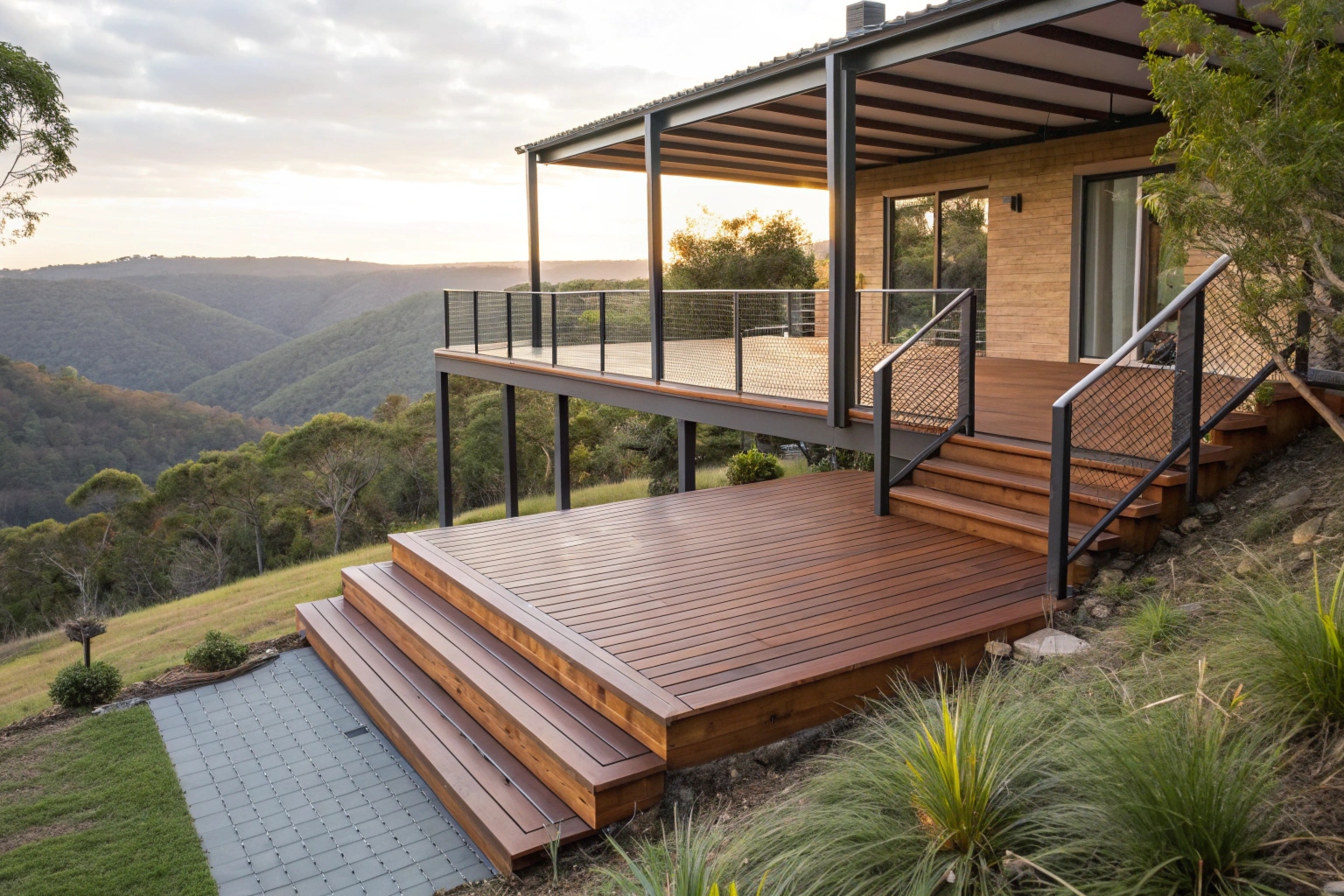
We install composite decking across metropolitan Adelaide and surrounding suburbs, covering the full range of residential project types — from ground-level entertaining decks and pool surrounds through to elevated structures on sloped blocks common across the Hills fringe and eastern suburbs.
Where We Work
Our installation crews are active across eastern suburbs including Campbelltown, Norwood, and Burnside, southern suburbs from Morphett Vale through to Hallett Cove and Marino, coastal properties across Glenelg and Brighton, and northern growth corridors including Angle Vale, Munno Para, and Blakeview. If your property falls within metropolitan Adelaide, we cover it.
From Quote to Completion
Our process starts with a free measure and quote at your property. We assess the site, discuss board and colour options with you in the actual outdoor environment, and provide a detailed written quote covering supply, subframe, installation, and edge finishing — no hidden costs added after the fact.
Once the project is confirmed, we handle material procurement, subframe construction, board installation, and final finishing as a complete service. Our crews work to a clear project timeline and leave the site clean at the end of each day.
What’s Included
Every installation includes subframe engineering, hidden fastening hardware, perimeter edge capping, and a final inspection before handover. We install to manufacturer specifications, which is a requirement for warranty validity — a detail that budget installers frequently overlook, with consequences that fall on the homeowner.
Frequently Asked Questions About Composite Decking Installation in Adelaide
How long does composite decking last?
Premium composite boards carry structural warranties of 25 years or more. Actual lifespan depends on product quality, installation standard, and basic maintenance. Boards installed on a correctly engineered subframe and cleaned periodically will comfortably reach and exceed that warranty period in Adelaide conditions.
Does composite decking get hot underfoot in summer?
All dark-toned decking surfaces absorb heat in direct sun — composite and timber alike. Lighter board colours reduce heat absorption noticeably. Many composite manufacturers now produce heat-reduced cap layer formulations that perform measurably better in high UV environments like Adelaide’s summer season.
Can composite decking be installed on an existing timber subframe?
In some cases, yes — but the existing subframe must be assessed for joist spacing, structural integrity, and moisture damage before installation proceeds. Composite requires tighter joist spacing than most older timber subframes were built to, so modification is frequently needed.
Is composite decking suitable for pool surrounds?
Composite is one of the strongest choices for pool surrounds. The splinter-free surface, moisture resistance, and slip-resistant textured profiles available across most premium ranges make it well suited to wet environments and bare feet — a meaningful advantage over untreated or ageing timber.
Do I need council approval for a composite deck in Adelaide?
Council approval requirements depend on deck height, size, and proximity to boundaries — not the decking material itself. We assess approval requirements as part of the quoting process and can advise on what applies to your specific site and project scope.
How do I clean composite decking?
Periodic cleaning with a stiff brush, warm water, and mild detergent is sufficient for routine maintenance. Avoid high-pressure washing at close range, which can damage the cap layer surface on some board profiles. Most manufacturers provide specific cleaning guidelines as part of warranty conditions.
What is the difference between capped and uncapped composite decking?
Capped composite boards have a full polymer sleeve wrapping all four sides of the board, protecting the timber fibre core from moisture and staining. Uncapped boards expose the core material on the edges and underside, making them more vulnerable to moisture ingress and long-term surface degradation.
How long does installation take?
A standard residential deck of 30–50 square metres typically takes two to four days from subframe construction through to edge finishing. Site conditions, deck height, and access all influence the timeline. We provide a clear project schedule at the quoting stage.
Can composite decking be used for elevated decks?
Yes. Composite boards are suitable for elevated deck structures, provided the subframe is engineered to the correct load-bearing specification. We assess structural requirements as part of every quote, including projects on sloped blocks across the Hills fringe and eastern suburbs.
How does composite decking compare to timber on resale value?
A professionally installed composite deck adds measurable value to an Adelaide residential property. The low-maintenance appeal is a tangible selling point for buyers who want a finished outdoor space without an ongoing upkeep commitment — particularly relevant in Adelaide’s strong outdoor entertaining culture.
Get a Free Quote for Composite Decking Installation in Adelaide
Composite decking installation transforms an underutilised outdoor space into a finished, functional area that performs through Adelaide’s demanding climate without the ongoing maintenance commitment that natural timber requires. From board selection through to subframe engineering and edge finishing, every element of the installation contributes to an outcome that looks considered, holds up over time, and adds genuine value to the property.
We work with Adelaide homeowners across the full project spectrum — from straightforward ground-level entertaining decks through to elevated structures on sloped blocks, pool surrounds, and multi-level outdoor spaces. Our supply and install service covers everything from the initial site measure through to final handover, with transparent pricing and no variations added after the quote is accepted.
What you get when you contact us:
• A free measure and quote at your property
• Board and colour selection advice viewed in your actual outdoor environment
• A detailed written quote covering subframe, supply, installation, and edge finishing
• Installation to manufacturer specifications for full warranty validity
• A clean site and clear project timeline from start to finish
Adelaide’s outdoor living season is too long and too important to leave the backyard underdelivering. Whether the project is a modest deck off the back of the house or a fully integrated outdoor entertaining zone, we bring the product knowledge and installation standards that produce a result worth investing in.
Contact us today to book your free measure and quote.
