
Why Choose a Freestanding Pergola Over an Attached Design?
Freestanding pergolas offer a level of design freedom that attached pergolas simply cannot match. Where an attached structure is anchored to the home, a freestanding design is governed only by the boundaries of the property itself — meaning placement, orientation, size, and roof pitch are all decided by function and preference rather than by where the walls happen to sit.
For many Adelaide properties, that distinction is the deciding factor. A home with a north-facing garden but a south-facing rear wall is a common example — an attached pergola in that position captures the wrong aspect entirely. A freestanding structure can be positioned to maximise winter sun, capture a breeze, or sit directly over the most usable part of the yard regardless of the home’s orientation.
Freestanding pergolas also work well on properties where the house layout makes attachment impractical — split-level homes, heritage facades, or homes where the outdoor entertaining zone is simply better suited away from the building. The result is a structure designed around how the space is actually used, not around the constraints of the existing architecture.

Freestanding Pergola Placement Options for Adelaide Properties
One of the strongest arguments for a freestanding pergola is how many placement options open up once the structure is no longer tied to the house. Adelaide blocks — particularly in the established eastern suburbs and the newer northern growth corridors — regularly offer enough space to position a freestanding structure well away from the building and still have a fully functional, connected outdoor space.
Placement over a pool or spa is one of the most common applications, creating a shaded poolside zone that operates independently of the main entertaining area. At the rear of a large block, a freestanding pergola turns unused lawn into a destination for dining, relaxing, or weekend entertaining. In a garden setting, the structure becomes a focal point within the landscaping rather than an addition to the house. Along a boundary, it delivers both privacy screening and covered outdoor space in a single build. The placement decision is driven entirely by how the yard is used and where shade, shelter, or definition is needed most.
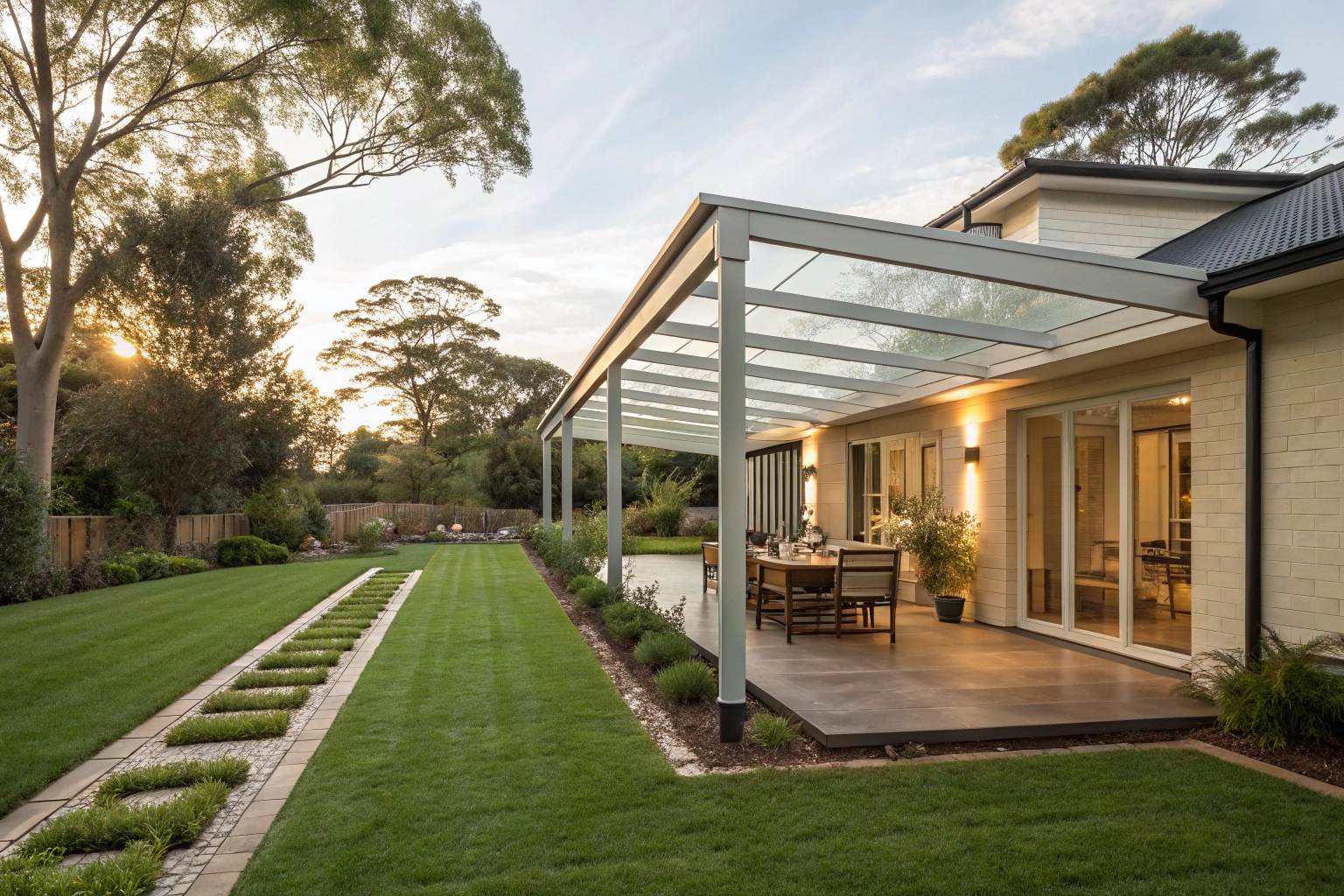
Freestanding Pergola Materials — Timber, Aluminium & Steel
| Timber | Aluminium | Steel |
|---|---|---|
| Timber freestanding pergolas deliver warmth and natural character that suits both traditional and contemporary Adelaide homes. Hardwood and treated pine options are available across a range of profiles and finishes. Timber ages beautifully in Adelaide’s climate when maintained correctly and remains a popular choice for homeowners prioritising aesthetic richness over low maintenance. | Aluminium freestanding pergolas are the go-to choice for homeowners seeking clean, modern lines with minimal upkeep. Powder-coated aluminium won’t rot, warp, or require periodic repainting, making it well suited to Adelaide’s UV-heavy summers. The material is lightweight, structurally reliable, and available in a wide range of colours and section profiles to suit most residential design styles. | Steel freestanding pergolas offer maximum span capability and structural strength, making steel the preferred material for larger structures or designs requiring wide open bays without intermediate posts. Steel suits bold, architectural pergola designs and handles Adelaide’s wind and weather loads with ease. Powder-coated finishes deliver corrosion resistance and a clean appearance across a long service life. |
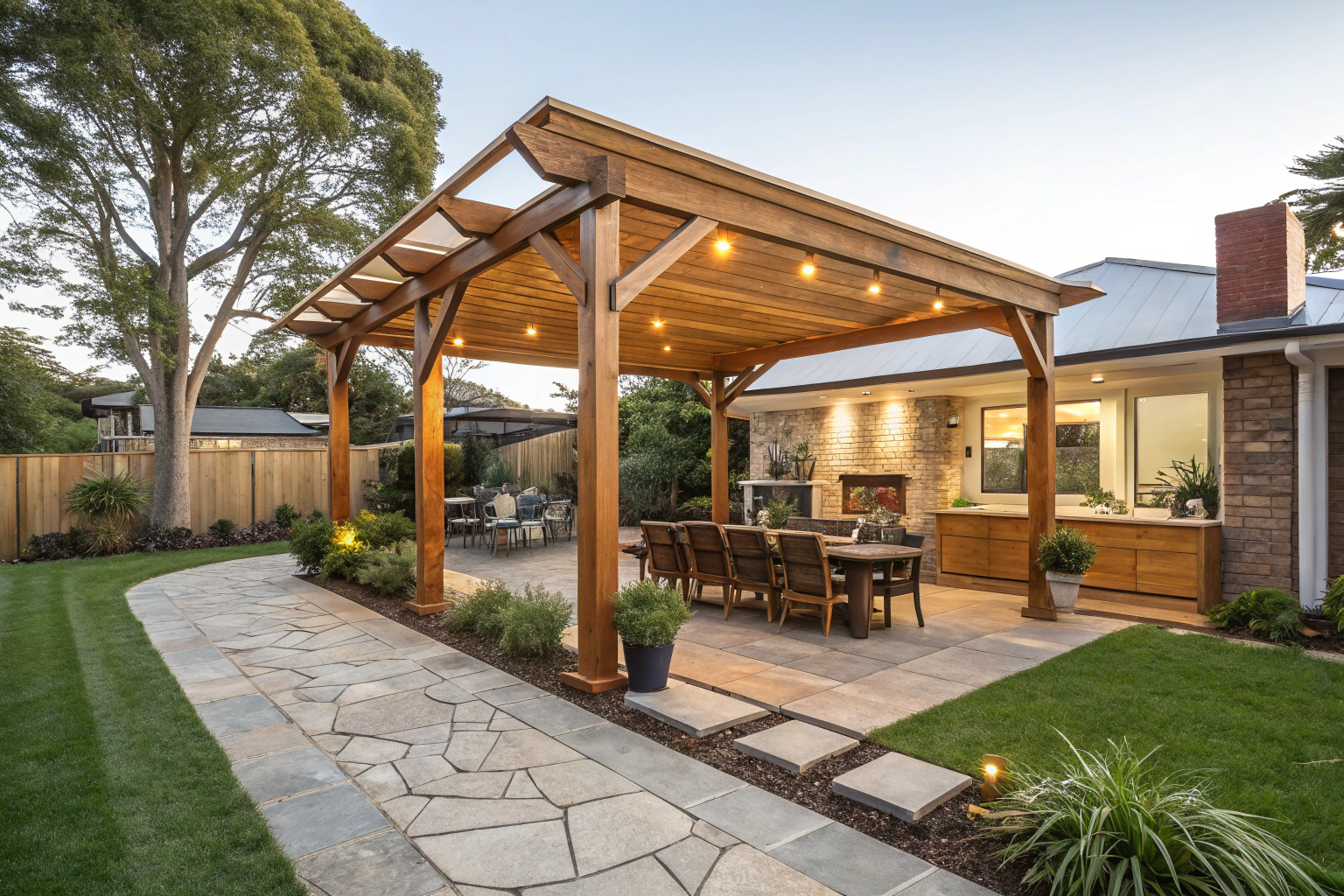
Footing and Structural Requirements for Freestanding Pergolas
Because a freestanding pergola has no connection to the home, the entire structural load — wind uplift, dead load, and lateral forces — is carried by the footing system alone. That makes the design and installation of a correct footing one of the most consequential decisions in the build.
Concrete footings for freestanding pergolas are sized according to post spacing, overall structure dimensions, roof type, and local wind classification. Adelaide’s coastal suburbs and elevated Hills fringe properties carry higher wind load requirements than sheltered inner suburban sites, and footing design needs to reflect that. Post base hardware — the connection between the concrete footing and the pergola post — is equally critical. Undersized or incorrectly installed post bases are one of the most common causes of long-term movement and structural deterioration in freestanding outdoor structures.
All freestanding pergola builds we carry out are engineered to meet current Australian standards, with footing specifications matched to the site conditions, structure size, and intended roof loading from the outset.
Custom Freestanding Pergola Design Adelaide
Every freestanding pergola we build starts with a design conversation, not a catalogue. Adelaide properties vary significantly in block size, orientation, soil conditions, existing landscaping, and the way outdoor space is actually used — and a custom design process is the only way to produce a structure that fits the site rather than approximates it.
The design stage covers placement, post spacing and height, roof style and pitch, material selection, and any additional features — café blinds, ceiling fans, outdoor lighting, or decorative screening — that form part of the finished space. For larger or more complex builds, structural drawings are prepared and submitted as part of the council approval process, where required.
We work with homeowners across Adelaide from the initial concept through to final installation, keeping the process straightforward and the communication direct. Whether the brief is a simple open-rafter timber pergola in an established garden or a large steel structure over a pool area, the starting point is always the same — a free, no-obligation consultation and quote
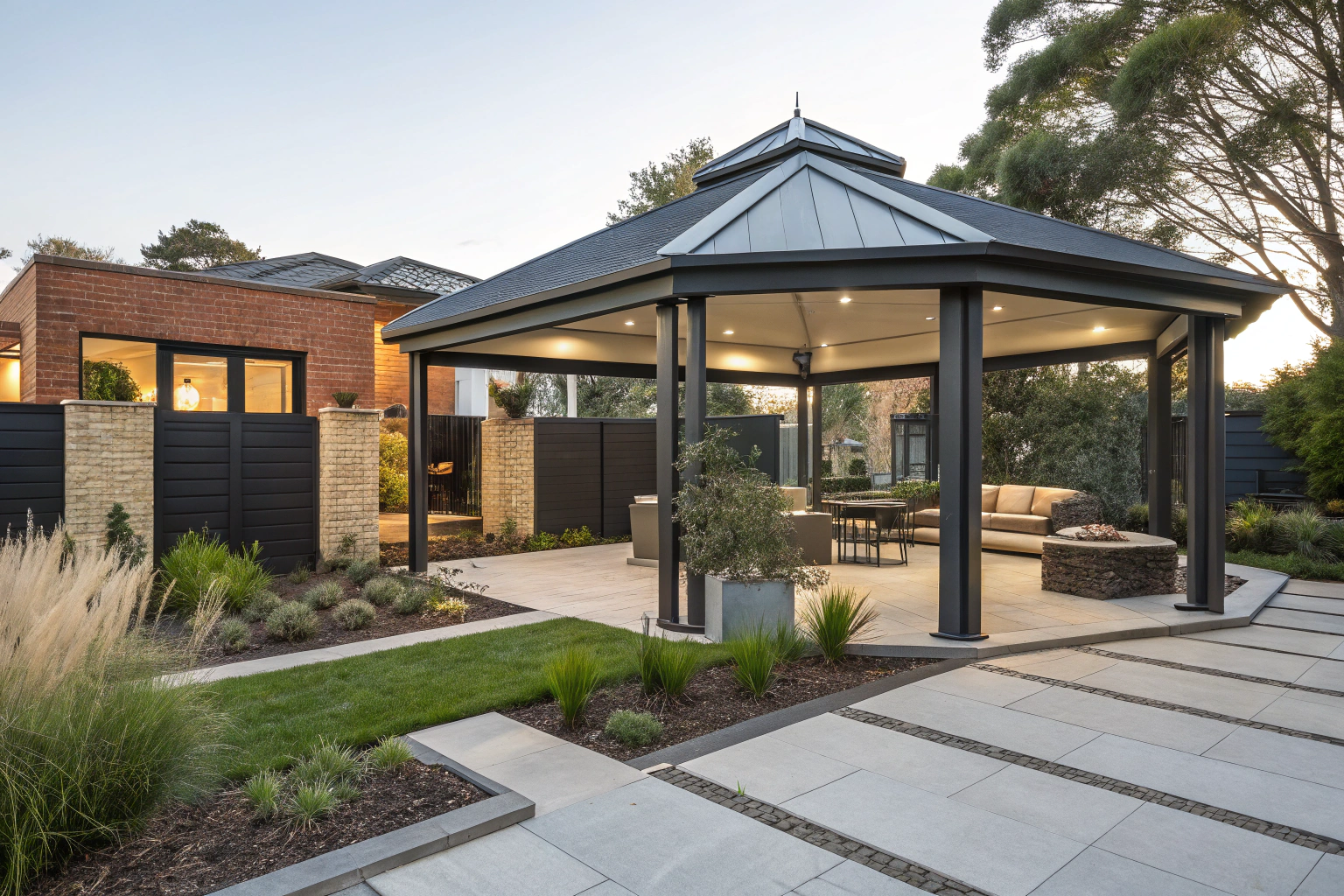
Roof Options for Freestanding Pergolas
One of the practical advantages of a freestanding pergola is that the roof pitch and orientation are set entirely by the design brief, not by the existing roofline of the home. That independence gives considerably more flexibility in how the structure performs — both in terms of weather protection and the overall aesthetic outcome.
Roof options across our freestanding pergola range include:
- Open rafters — maximum airflow, filtered light, and a classic pergola aesthetic suited to climbing plants or shade cloth additions
- Shade cloth — cost-effective UV protection with good airflow retention, well-suited to Adelaide’s high UV summers
- Polycarbonate sheeting — full rain protection with natural light transmission, available in clear, opal, and tinted profiles
- Insulated roof panels — the highest performing option for year-round use, providing both weather protection and significant heat reduction under the roof space
Because the freestanding structure sits independent of the home, roof pitch and drainage direction can be oriented to suit the site rather than defaulting to whatever the house dictates. This makes water management and long-term roof performance considerably easier to get right from the outset.
Freestanding vs Attached Pergola — Which Is Right for Your Property?
The decision between a freestanding and attached pergola comes down to three things: where the usable outdoor space sits on the property, how the home’s existing architecture affects placement, and what the structure is ultimately for.
An attached pergola works well when the goal is a seamless connection between indoor and outdoor living — a covered transition directly off a sliding door, kitchen, or living room. It suits properties where the best outdoor space is immediately adjacent to the house, and the roofline allows for a clean structural connection.
A freestanding pergola is the better fit when the ideal location is away from the house, when the home’s facade or roofline makes attachment impractical, or when the brief calls for a dedicated outdoor destination — a poolside retreat, a garden dining space, or a covered zone that functions entirely on its own terms. For Adelaide properties with generous blocks or awkward home orientations, the freestanding option regularly delivers the more functional and better-looking result.
Frequently Asked Questions — Freestanding Pergolas Adelaide
A freestanding pergola is a self-supporting outdoor structure with no connection to the home. It stands independently on its own concrete footings and can be positioned anywhere on the property.
An attached pergola connects directly to the home’s wall or roofline. A freestanding design is independent, giving complete freedom over placement, orientation, roof pitch, and size without being governed by existing architecture.
Anywhere the site allows — over a pool, at the rear of the block, centred in a garden, along a boundary, or adjacent to a shed. Placement is driven entirely by function and preference.
In many cases, yes. Council approval requirements in South Australia depend on structure size, height, placement relative to boundaries, and local council rules. We guide clients through the approval process where required.
We build freestanding pergolas in timber, aluminium, and steel. Each material has distinct advantages — timber for character, aluminium for low maintenance, and steel for maximum span and structural strength.
Extremely important. Because the structure has no connection to the home, concrete footings carry the entire load. Footing size and post base hardware are engineered to match the structure dimensions, roof type, and local wind classification.
Get a Free Freestanding Pergola Quote in Adelaide
A freestanding pergola is one of the most flexible investments an Adelaide homeowner can make in their outdoor space — and getting the design right from the start makes all the difference. We work with homeowners across Adelaide and surrounding suburbs, from initial concept through to completed installation, with a process that’s straightforward and communication that’s direct.
Whether the brief is a timber pergola in an established garden, an aluminium structure over a pool, or a large steel pergola at the rear of a generous block, we’ll put together a detailed quote based on your specific site, not a generic estimate.
Contact us today for a free consultation and quote. No obligation, no pressure — just a clear picture of what’s possible for your property.
