
What a Single Carport Does to Your Property’s Street Appeal
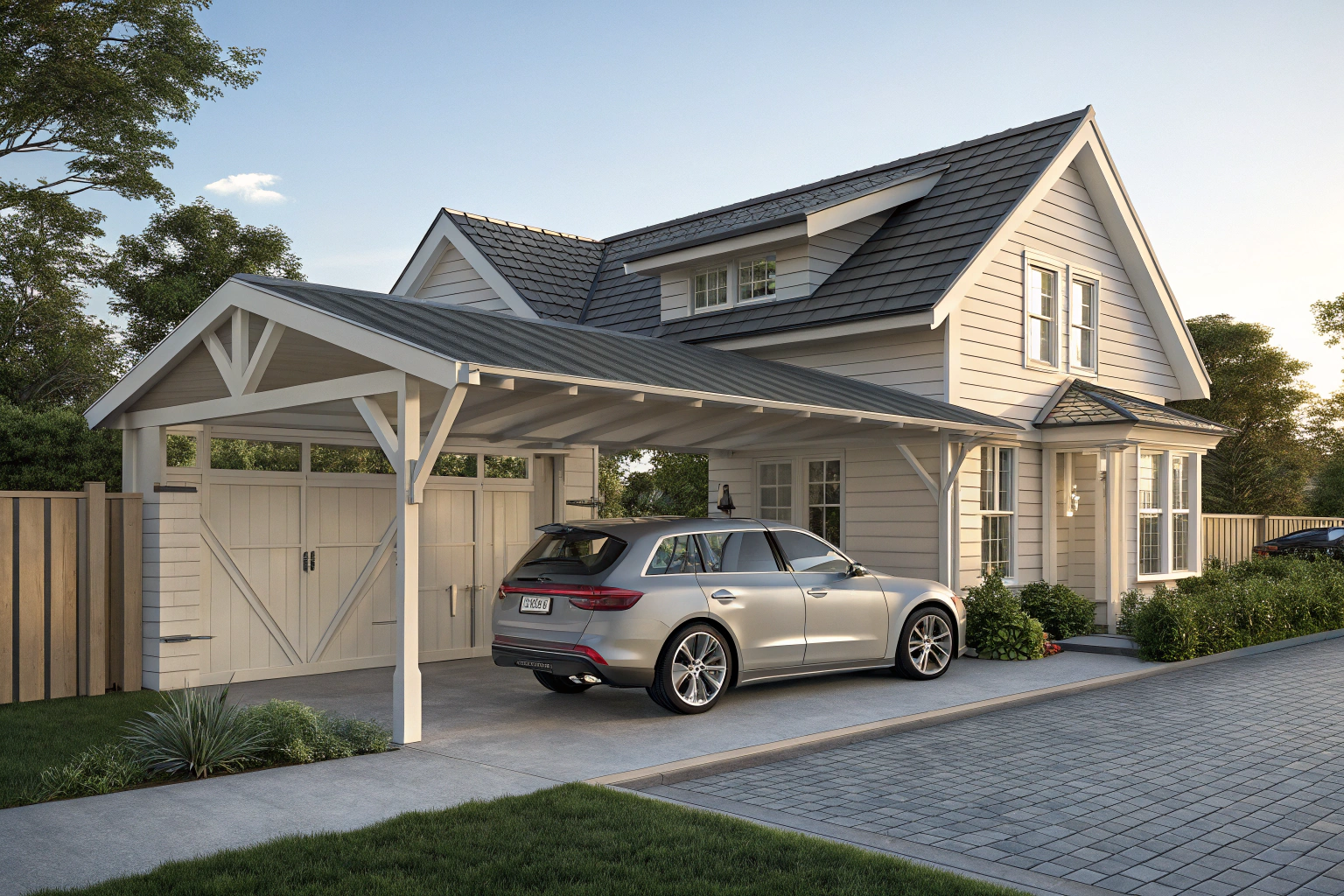
A well-designed single carport does more than shelter a vehicle — it becomes a considered part of the home’s exterior. When the structure is matched to the roofline, finished in a complementary colour, and built with materials that suit the home’s age and style, the result reads as intentional rather than added on. In Adelaide’s established suburbs — Campbelltown, Norwood, Morphett Vale, Burnside — homes often have strong existing character. A carport that works with that character rather than against it lifts the entire frontage. In newer growth corridors like Angle Vale and Munno Para, a clean contemporary carport ties together a front elevation that’s still finding its finish.
Street appeal has a direct relationship with perceived property value. A carport that looks like it belongs adds to that equation. One that clashes with the home’s exterior does the opposite. Getting the design right from the start — proportions, pitch, materials, and colour — is what separates a single carport that adds value from one that simply takes up space.

Designing a Carport That Complements Your Home
The design of a single carport should always take its cues from the home it’s attached to or positioned beside. Roof pitch is the starting point — a carport that mirrors or closely references the existing roofline integrates naturally, while a mismatched pitch draws the eye for the wrong reasons. Colour selection follows the same logic. Colorbond finishes across the full range give plenty of room to match or deliberately contrast in a way that still reads cohesively against the home’s exterior palette.
Material choice reinforces the overall aesthetic. Timber carports suit character homes, Federation-era properties, and older suburban builds where a warm, traditional finish is appropriate. Aluminium works well on contemporary homes where clean lines and low maintenance are the priority. Steel suits larger or more industrial-style builds where structural presence is part of the design intent. Whichever direction suits the property, the carport should feel like it was always part of the plan — not something that arrived later and never quite fit.
Why Material Choice Matters More Than Most Homeowners Expect
Most homeowners approach a single carport project with a rough idea of what they want it to look like — and very little thought about what it’s made from. Material choice drives more of the outcome than aesthetics alone. It affects structural performance, maintenance requirements, lifespan, and how well the carport holds up against Adelaide’s specific climate conditions over time.
- Timber delivers warmth and character, suits older and heritage-style homes, and takes paint or stain finishes well — but requires periodic maintenance to stay in good condition
- Aluminium is lightweight, corrosion-resistant, and virtually maintenance-free — the practical choice for contemporary homes where longevity with minimal upkeep is the priority
- Steel offers maximum strength and span, handles larger structural loads, and is the right call where a more robust or heavy-duty carport is needed
The material that’s right for one property isn’t automatically right for another. Soil conditions, wind exposure, coastal proximity, and the home’s existing construction all factor into the recommendation. Getting that decision right at the start avoids problems that are expensive to fix later.
Single Carports for New Builds and Established Homes
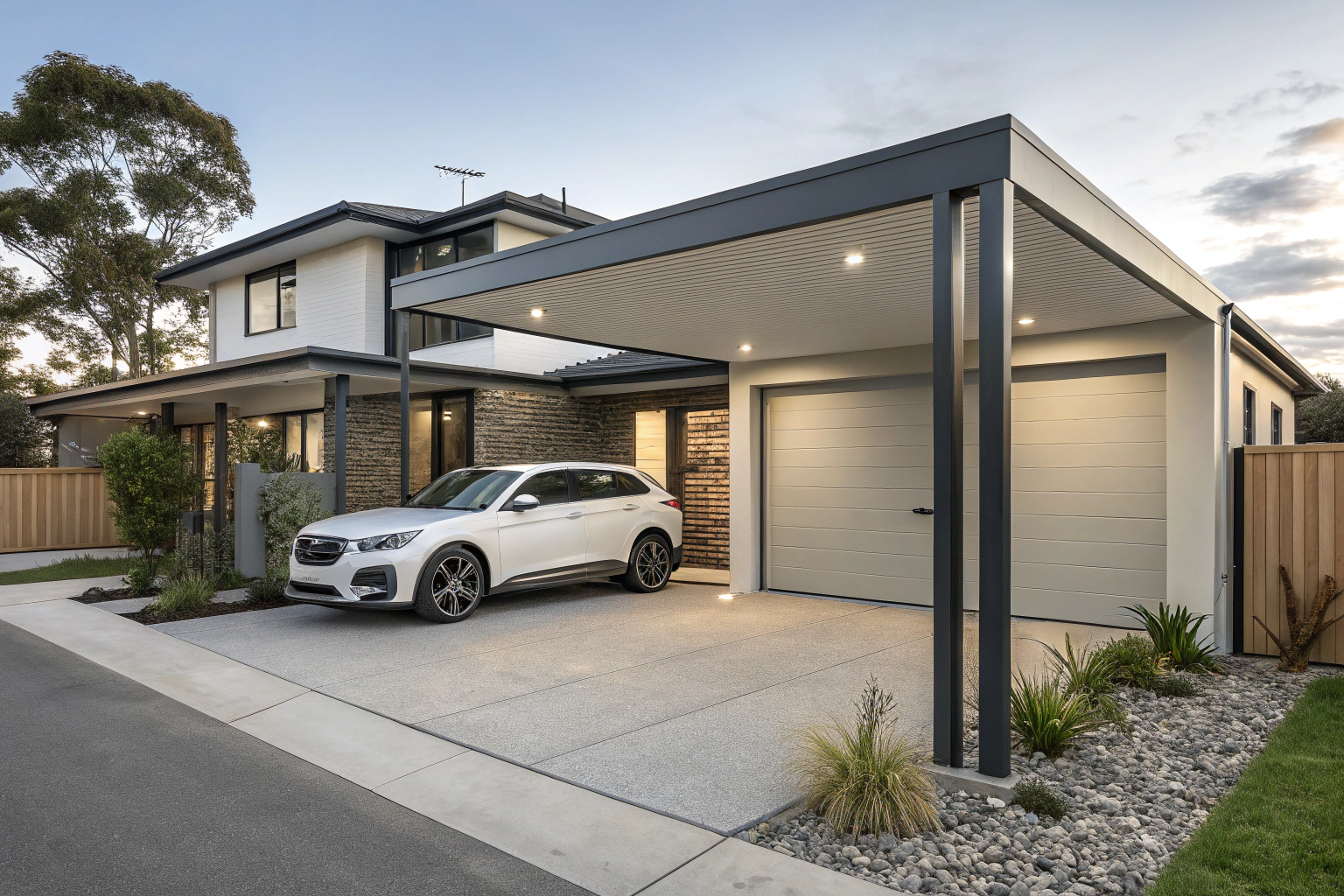
The context of the property shapes almost every decision in a single carport build. New builds and established homes present different starting points — and the approach to each needs to reflect that.
On a new build, particularly in Adelaide’s northern growth corridors like Angle Vale, Munno Para, and Blakeview, the opportunity is to design the carport as part of the overall exterior from the start. The builder has often left a blank driveway and an exposed frontage. A single carport installed at this stage ties the front elevation together, adds immediate function, and avoids the cost of retrofitting later when landscaping and fencing are already in place.
On an established home, the carport needs to work around what already exists — existing rooflines, garden layouts, driveway positions, and the home’s overall exterior finish. The design process takes more cues from the property as it stands. The result, when done well, looks like it was always part of the original build rather than added years later.
Roof Options That Handle Adelaide’s Climate
The roofing material on a single carport does the heaviest work of the entire structure. Adelaide’s climate is demanding — prolonged UV exposure, extreme summer heat loads, occasional heavy rain events, and hail — and the roof is what stands between those conditions and the vehicle underneath.
Colorbond steel sheeting is the most common choice for residential carport builds across Adelaide. It’s durable, low maintenance, available across the full Colorbond colour range, and has a proven performance record in local conditions over decades. Where natural light into the carport space is preferred, polycarbonate panels are the better fit — particularly for side or rear positions where a brighter, more open feel works better than a solid roof. For maximum weather and heat protection, insulated roof panels reduce radiant heat transfer significantly and are the right call where the carport adjoins a living area or where heat management is a genuine daily consideration.
Each option carries a different price point and performance profile. The right choice depends on the carport’s position on the block, what it’s sheltering, and how the space will be used.
Pitch, Height, and Clearance: Getting the Dimensions Right
Dimensions are where a single carport either works for the property or creates problems that can’t easily be fixed after installation. Three factors drive the conversation.
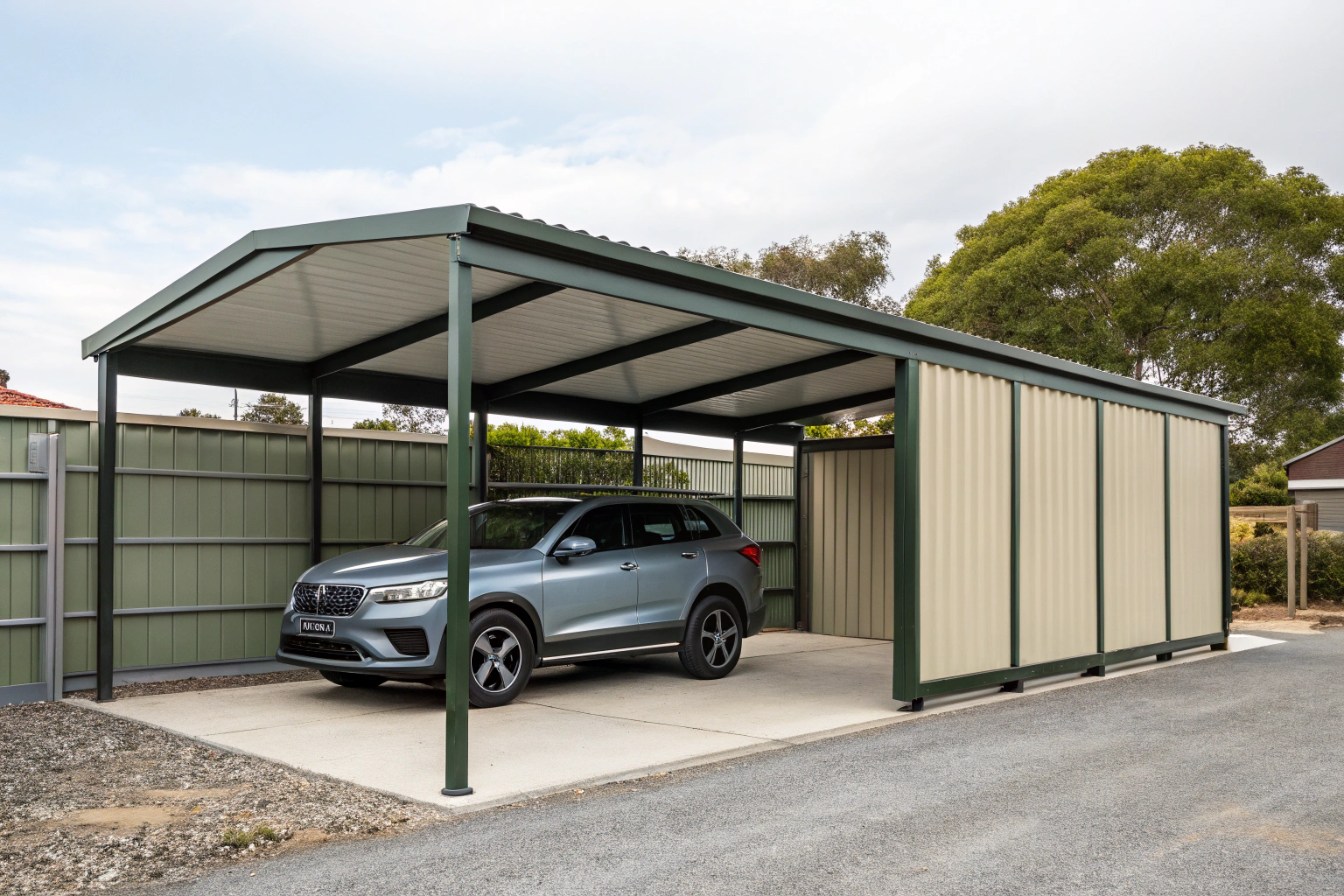
Roof pitch affects both the aesthetic and the functional performance of the structure. A pitch that references the home’s existing roofline integrates naturally into the exterior. It also determines how efficiently the roof sheds water — a flat or near-flat pitch requires more careful detailing to handle Adelaide’s rain events without pooling or leaking at the junction points.
Height clearance is a practical consideration that catches homeowners out more often than expected. Standard passenger vehicles clear a 2.4 metre height easily. SUVs, utes, and four-wheel drives need more — a minimum of 2.7 metres is the more practical benchmark for larger vehicles, and roof racks or rooftop carriers push that requirement higher again.
Overall proportions tie the three elements together. A carport that’s correctly pitched, appropriately high, and sized in proportion to the driveway and home frontage reads as a considered addition. One that’s too low, too flat, or out of scale with the block stands out for the wrong reasons.
Footing Systems and Site Preparation
The footing system is the part of a single carport build that most homeowners never see — and the part that determines how well the structure performs over its lifetime. Getting it right starts with understanding the site.
Soil conditions across Adelaide vary significantly. Clay-heavy soils in the eastern and southern suburbs expand and contract with moisture changes, placing different demands on a footing system than the sandier profiles found in coastal and northern areas. The footing specification for any carport is determined by the soil classification of the site, the structural loads the carport will carry, and the requirements set out in the engineering documentation.
For an attached single carport, the connection to the home’s existing structure is also a factor — how the carport ties into the wall or roofline affects both the footing design and the overall structural approach. Freestanding carports have their own footing requirements based on span and height. Site preparation covers drainage fall, any required excavation, and making sure the finished slab or pad is level, properly graded, and ready for the structure above.
Frequently Asked Questions
Council approval requirements in Adelaide depend on the carport’s size, height, and position on the block. Many single carports fall within complying development provisions, but we assess each site individually and handle the approval process where required.
We build single carports in timber, aluminium, and steel. Each material suits different property styles, budgets, and performance requirements. We’ll recommend the right option based on your home’s existing exterior, block conditions, and how the carport will be used.
Most single carport installations are completed within one to three days once site preparation is done. Timeframes depend on the complexity of the design, footing requirements, and whether council approval is needed prior to commencement.
We install Colorbond steel sheeting, polycarbonate panels, and insulated roof panels. Colorbond is the most popular choice for durability and colour range. Polycarbonate suits positions where natural light is preferred. Insulated panels are best where heat management is a priority.
A standard single carport is typically 3.0 to 3.6 metres wide and 5.4 to 6.0 metres long. Exact dimensions are determined by the vehicle being sheltered, available space on the block, and any council siting requirements that apply to the property.
Design integration is a core part of our process. Roof pitch, Colorbond colour selection, and material choice are all matched to the home’s existing roofline and exterior finish so the finished carport looks like a considered part of the property.
Get a Free Quote on Your Single Carport
We design and build single carports across Adelaide — timber, aluminium, and steel, supply and installed. From initial consultation through to completed installation, we handle the full job including design, engineering, council approval where required, and site preparation.
Getting started is straightforward. We visit the site, assess the block, discuss your vehicle requirements, material preferences, and design goals, then provide a detailed quote with no obligation. There are no hidden costs and no surprises mid-build. Every project is priced clearly from the start so you know exactly what’s involved before any work begins.
If you’re ready to add a purpose-built single carport to your Adelaide home, get in touch with our team today for a free, no-obligation quote.
