
Built for a Tougher Environment Than a Standard Pergola
A pool pergola doesn’t live the same life as a pergola over a backyard deck or alfresco area. The pool environment throws extra challenges at a structure — constant moisture in the air, chlorine drifting up off the water, and UV that doesn’t just hit from above but bounces straight back off the surface of the pool itself. That reflected glare hits the underside of a structure in a way a standard patio cover never has to deal with, and it ages materials faster if they’re not suited to the job.
This is why material selection for a pool pergola isn’t the same conversation as a standard backyard build. Timber can absolutely work around a pool, but it needs the right treatment and finish to handle the chlorine and moisture without warping, splitting, or fading out within a few seasons. Aluminium tends to be the standout choice for pool-adjacent structures — it’s naturally corrosion-resistant, handles wet conditions without flinching, and needs very little upkeep over the years. Steel is also an option where the design calls for it, but it has to come with the right coating system to stop rust taking hold so close to chlorinated water.
Getting the material right at the start saves a lot of grief later. A pergola built for a dry backyard corner won’t necessarily survive five years of pool spray and reflected sun.

Designing Around the Pool, Not Just Over It
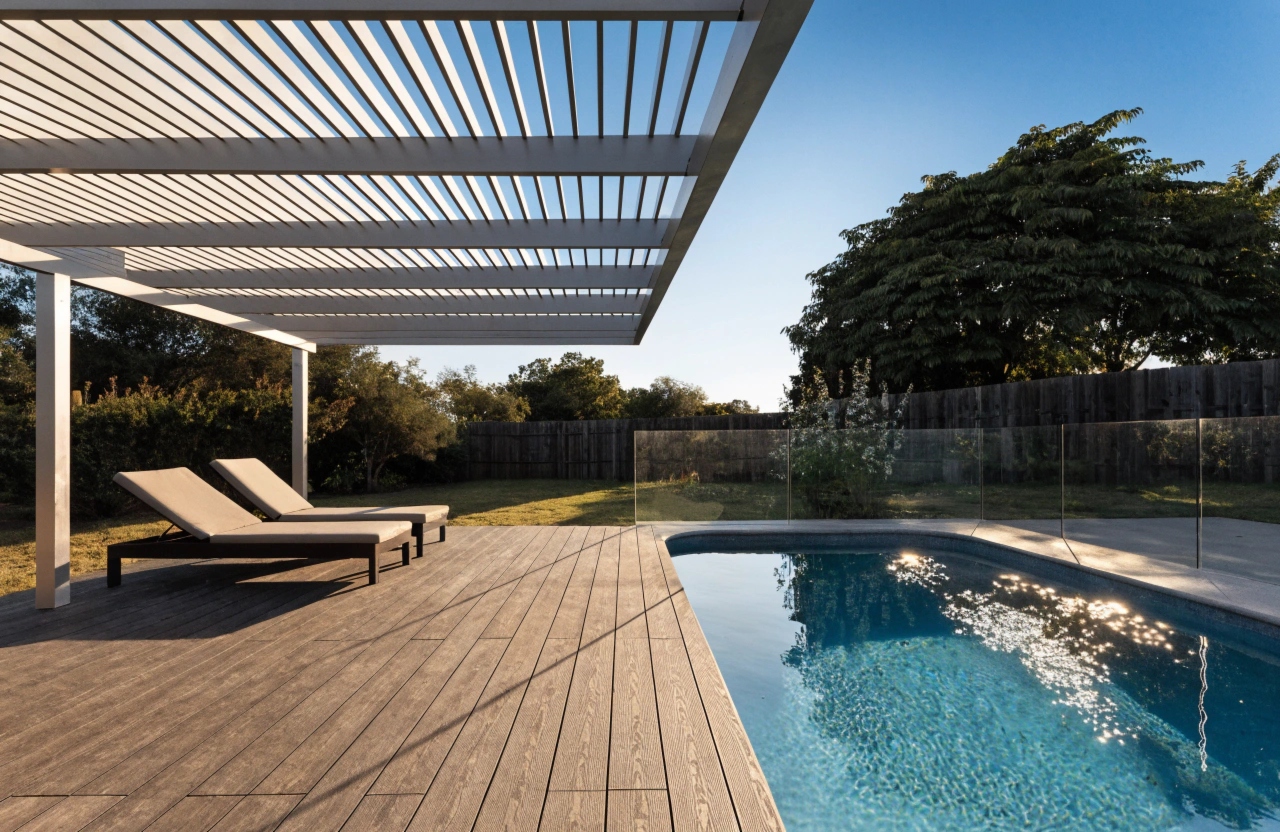
Where a pool pergola sits matters as much as what it’s made from. We position the structure to catch shade across the water and the surrounding deck through the hottest part of the afternoon, which usually means thinking carefully about orientation rather than just centring it over the pool and hoping for the best. Get the angle wrong and you end up with a beautiful structure that shades the lawn instead of the people actually swimming.
Height and roofline come into the same conversation. A pool pergola that sits too low or too enclosed can make the whole area feel boxed in, which works against the open, breezy feel that makes a pool area enjoyable in the first place. We aim for a roofline that provides real shade without closing off the sky and the sense of space around the water.
Pool fencing requirements stay in place no matter where the pergola goes, so the structure has to be designed around them rather than the other way round. That means careful placement of posts and footings so fencing compliance isn’t compromised and the finished look doesn’t feel like two separate projects bolted together.
Roof options for pool pergolas typically include:
• Open rafter designs — preserve the outdoor feel and let air move freely across the water
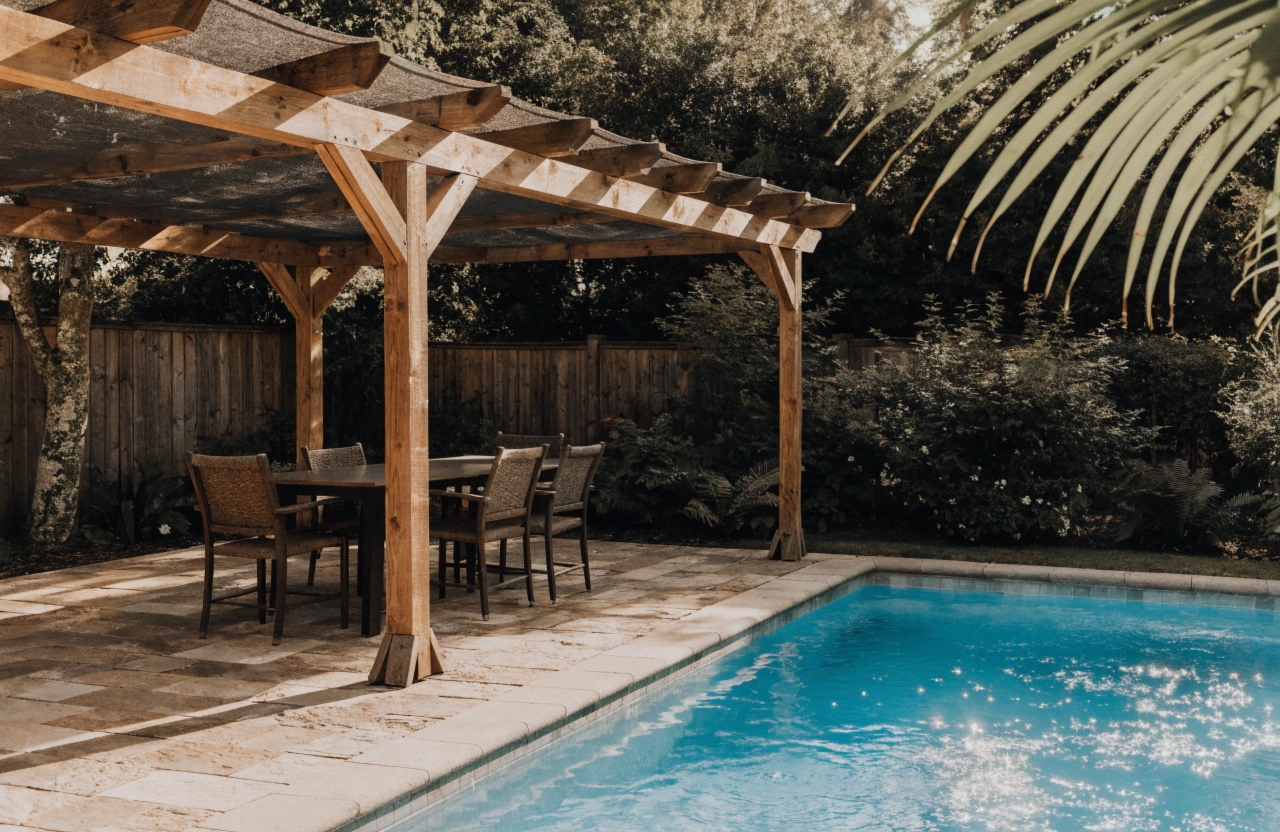
• Shade cloth — filters UV while keeping airflow through the structure
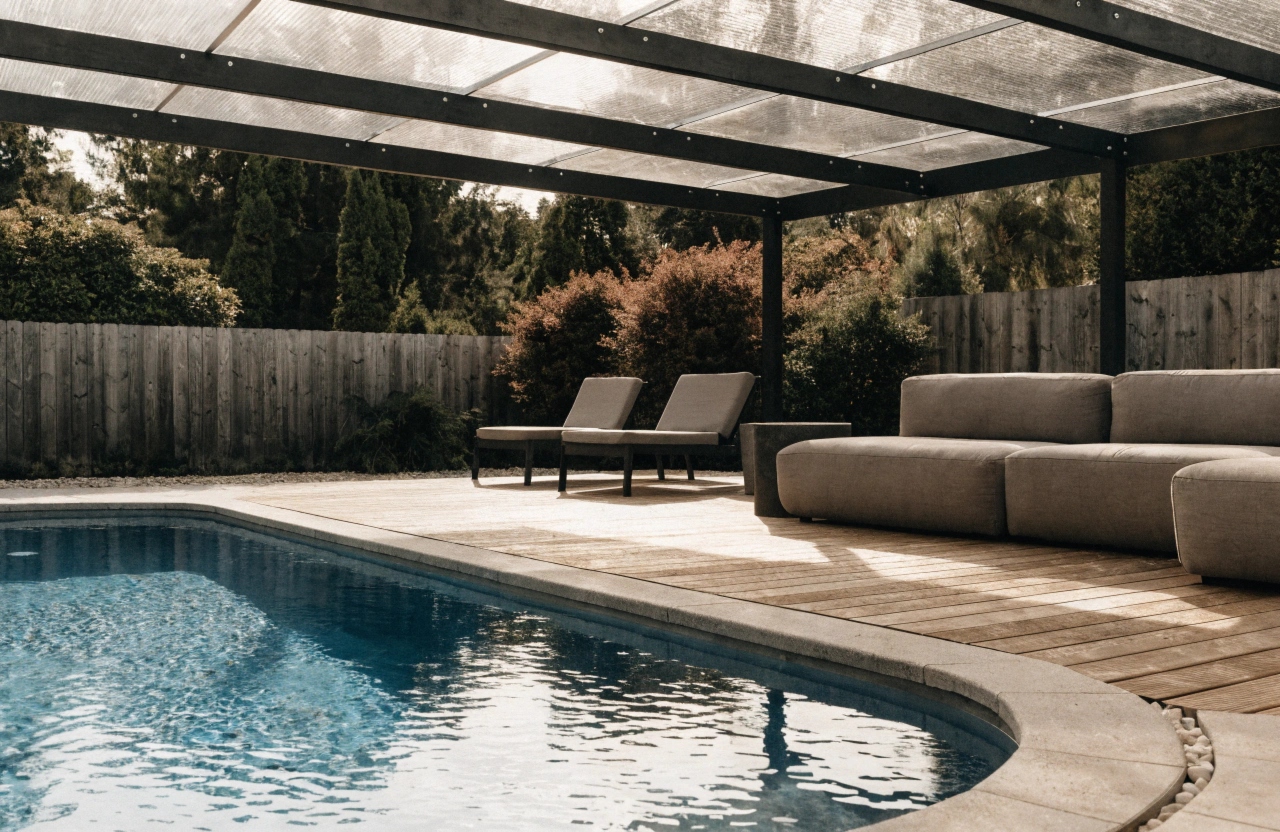
• Polycarbonate panels — block weather without cutting natural light over the pool
Coordinating With Your Pool Deck
A pool pergola doesn’t go up in isolation — it has to work with the deck that’s already there, or the one being poured alongside it. Footing and post placement need to line up with the existing deck layout, expansion joints, and drainage falls, because pool decks are graded specifically to move water away from the coping and into the right drainage points. A post dropped in the wrong spot can interrupt that fall and create a puddle exactly where nobody wants one.
We work through this coordination early, checking deck material, joint lines, and drainage direction before any footings go in. It’s a small detail in the bigger picture of the build, but it’s the difference between a pool pergola that looks like it was planned alongside the deck and one that looks like an afterthought dropped on top of it. Getting this right also protects the deck itself — water pooling around a post base over time can cause cracking or staining that’s a hassle to fix down the track.
For pools with existing decking, we work around what’s already in the ground wherever possible. For new builds or full backyard renovations, we coordinate directly with the deck installation so the pergola footings and the deck pour happen in the right order, with the right clearances built in from the start.
Maintenance and Longevity Around a Pool
A pool pergola built with the right materials shouldn’t demand much from you once it’s up, but the pool environment does mean a slightly different upkeep routine than a standard backyard structure. Aluminium stays the lowest-maintenance option over the years — a rinse down every so often to clear chlorine residue and dust is generally enough to keep it looking sharp, since it doesn’t corrode or need repainting the way other materials can.
Timber needs more attention near a pool than it would in a dry corner of the yard. Re-coating or re-oiling on a regular cycle protects against the combination of moisture and chlorine, and skipping this step is usually what leads to premature fading, splitting, or greying timber a few years down the track. Steel structures hold up well long-term provided the coating system was right from the start, with an eye kept on any areas where the coating might wear thin over time, particularly near fixings and footings closest to the water.
Getting the material and finish right at the build stage is what makes the difference between a pool pergola that still looks sharp after a decade and one that’s showing its age within a few years. We talk through realistic maintenance expectations as part of the design process, so there’s no surprise about what upkeep actually looks like once the structure is up and the pool season gets underway.
Our Design and Quote Process
Getting a pool pergola right starts with seeing the space in person. We come out to the property, look at the pool’s orientation, the existing deck and fencing, and where the sun actually falls across the water through the day, then talk through what you’re after — whether that’s a fully shaded entertaining zone or something lighter that just takes the edge off the afternoon heat.
From there, we put together a design that accounts for material choice, roofline, and how the structure ties into your existing pool fencing and deck, along with a clear quote so there are no surprises once work starts. We’ve delivered pool pergola installations across Adelaide’s eastern suburbs, the south, and the Hills fringe, working with timber, aluminium, and steel depending on what each pool environment calls for.
Every pool is set up a little differently, and every backyard has its own constraints around fencing, deck levels, and sun direction, so we don’t work off a one-size-fits-all template. The design process is built around your actual pool, not a generic structure dropped into the quote.
Ready to make your pool area work harder through Adelaide’s long pool season? Get in touch for a free design consultation and quote, and we’ll come out, walk the space with you, and put together a plan for a pool pergola built around how your family actually uses the pool.
Frequently Asked Questions
What's the best material for a pool pergola in Adelaide?
Aluminium tends to be the standout for pool environments, since it resists corrosion and handles chlorine and moisture without much upkeep. Timber and steel both work too, provided they’re treated or coated correctly for a wet, reflective-UV setting.
Will a pool pergola interfere with my pool fencing?
Not if it’s designed properly. We coordinate post and footing placement so the fence stays a continuous, compliant barrier, with no climbable elements created near the boundary, keeping the pool pergola and fencing working together rather than against each other.
How do you decide where to position a pool pergola?
Positioning comes down to sun direction and how the shade falls across the water and deck through peak afternoon hours. We assess this on site so the pool pergola actually shades the people using the pool, not just the lawn beside it.
Does a pool pergola need to match my existing deck?
The structure doesn’t need to match aesthetically, but footings and posts do need to coordinate with deck joints and drainage falls so water still moves away from the pool coping the way it’s meant to.
What roof option lets the most light through?
Open rafter designs and polycarbonate panels both keep natural light moving into the pool area, while shade cloth filters UV more heavily while still allowing airflow underneath.
How much maintenance does a pool pergola need?
It depends on the material. Aluminium needs little beyond an occasional rinse, timber needs periodic re-coating to handle chlorine exposure, and steel needs the coating system checked over time, particularly near fixings closest to the water.
Get a Free Pool Pergola Design and Quote
If your pool’s been sitting underused through the hottest part of the year, a pool pergola is the fix that actually changes how you use the space. We come out to the property, walk the pool area with you, and put together a design that accounts for material, shade coverage, deck integration, and pool fencing compliance, with a clear quote attached so you know exactly what’s involved before anything gets built.
We’ve delivered pool pergola projects across Adelaide’s eastern suburbs, the south, the Hills fringe, and the northern growth corridors, working with families who want their pool to carry the household through summer rather than get used for a handful of mild days each year. Every site comes with its own mix of sun direction, fencing, and deck layout, and the design process is built around what’s actually in your backyard.
Get in touch for a free design consultation and quote on your pool pergola. We’ll talk through materials, shade options, and how the structure fits with your existing pool and fencing, then put together a plan that turns your pool area into the part of the house everyone wants to be in.
